Completing cancer treatment can be an important milestone, but for some patients, the road to recovery continues long after treatment is done.
After treatment for head and neck cancer, changes in the mouth, throat, jaw or salivary glands may continue to affect eating, swallowing, speaking or jaw movement for months or longer. Some effects may be present during treatment and gradually improve, while others can persist or develop later as the treated tissues heal and change.
These changes can be frustrating, but they should not simply be accepted as something you have to live with. Understanding why they happen and getting them assessed can help identify ways to manage symptoms and support your recovery.
Why Can Side Effects Continue After Cancer Treatment?
Eating, swallowing and speaking involve several structures working together, including the tongue, jaw, throat, voice box, salivary glands, muscles and nerves.
Head and neck cancer treatments can affect these structures in different ways, depending on where the cancer was located and the treatment received.
For example, surgery may alter or remove affected tissue, while radiotherapy can cause changes to the tissues and salivary glands in the treated area. These changes may affect how a person chews, swallows, speaks, or produces saliva, which is why some side effects can continue even after treatment has ended.
Surgery
Surgery may involve removing or reconstructing tissues in the mouth, tongue, throat, jaw, salivary glands, or voice box.
When the anatomy changes, the remaining muscles and tissues may need to work differently. For example, surgery involving the tongue may affect how food is moved around the mouth and pushed towards the throat, while surgery involving the throat or voice box may affect swallowing or voice production.
Scarring, swelling, changes in sensation and nerve involvement after surgery can also influence how well these structures move and coordinate.
Radiotherapy
Radiation treatment for cancer can cause inflammation and swelling or shortly after treatment. Over time, the tissues affected by radiotherapy may become stiffer and less flexible due to fibrosis, a process where scar-like tissue develops.
This stiffness can affect the movement of tissues and muscles involved in swallowing or opening the jaw.
Some treatment-related effects may be noticed during treatment, while others can become more noticeable later. The timing and severity vary from person to person.
Dry Mouth
Radiotherapy involving the head and neck can also affect the salivary glands, potentially causing dry mouth.
Dry mouth can make chewing, swallowing and speaking more difficult because saliva helps keep the mouth moist and supports these functions.
The timing and severity of dry mouth varies from person to person. Some symptoms improve as the body recovers, while others may persist or appear years later.
New, persistent or worsening symptoms should still be assessed rather than automatically attributed to previous treatment.
What Changes Might You Notice?
The effects of treatment can show up in different ways. Some people may notice problems when eating, while others may experience changes in their voice, speech, or ability to open their mouth.
When Eating and Swallowing Become Difficult
Difficulty swallowing is medically known as dysphagia. Dysphagia can affect the ability to move food or liquids safely from the mouth into the oesophagus.
When treatment affects the muscles, nerves, or tissues involved in swallowing, food or liquid may not move through the mouth and throat as smoothly or safely as before. In some cases, material may enter the airway instead of travelling into the oesophagus.
Symptoms may include:
- The sensation that food or drink is getting stuck when you swallow
- Difficulty chewing or moving food around your mouth
- Needing much longer to finish a meal
- Coughing or choking when eating or drinking
- Needing to food of a softer texture
- Difficulty swallowing particular textures, such as dry or hard foods, or certain liquids
- Unexplained weight loss or difficulty maintaining your food and fluid intake
Swallowing difficulties are not the same. Some people may find solid foods harder to manage, while others may struggle more with liquids.
Coughing or Choking During Meals
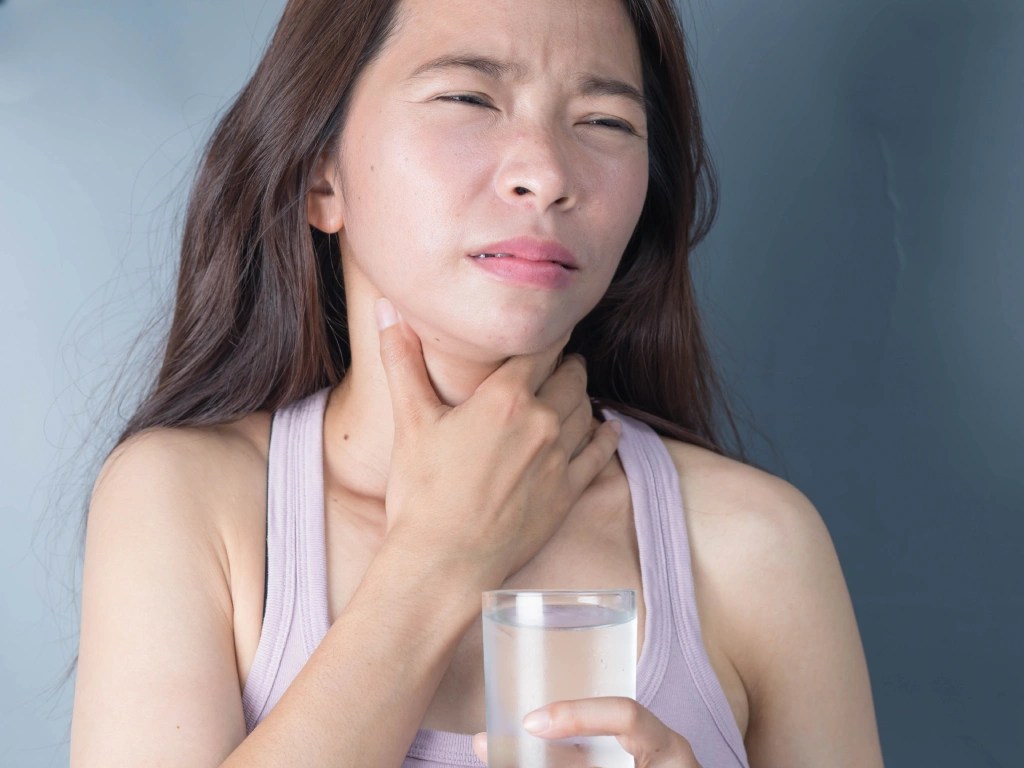
Coughing while eating or drinking can sometimes happen when food or liquid enters the airway instead of travelling safely down the oesophagus.
This is known as an aspiration, and it is different from choking. Choking occurs when something blocks the airway and prevents normal breathing. Aspiration occurs when food, liquid, or saliva enters the airway and may sometimes happen without an obvious choking episode.
When food, liquid or saliva enters the airway, it can travel into the lungs. This can irritate the airways and, in some cases, lead to a chest infection or aspiration pneumonia. Repeated aspiration may increase this risk, particularly in people with swallowing difficulties or other conditions that affect their ability to protect the airway.
What Is Silent Aspiration?
Some people experience silent aspiration, where material enters the airway without triggering an obvious cough or choking response.
This is one reason why the absence of coughing does not necessarily mean that swallowing is safe.
Signs that may warrant a swallowing assessment include:
- Frequent coughing during or after meals
- Choking episodes when eating or drinking
- A wet or gurgly-sounding voice after swallowing
- Food or liquid repeatedly feeling as though it is going “the wrong way”
- Recurrent chest infections
- Difficulty maintaining adequate food or fluid intake
If these symptoms occur repeatedly, speak with your doctor about whether a swallowing assessment is appropriate.
Changes in Your Voice or Speech
Head and neck cancer treatment can affect the voice box and surrounding tissues involved in producing the voice.
You may notice that your voice:
- Sounds different from before
- Becomes weaker or hoarser
- Becomes tiring to use for longer periods
Changes involving the tongue, jaw or other parts of the mouth can also affect how clearly, you speak.
Dry mouth may make speaking uncomfortable, while changes to the tissues of the mouth and throat can affect voice or speech depending on the area treated.
Persistent or worsening changes in your voice or speech should be discussed with your doctor, particularly if they interfere with everyday communication.
Difficulty Opening Your Mouth: What Is Trismus?
Trismus refers to reduced ability to open the mouth.
It can occur when cancer treatment affects the muscles or tissues around the jaw. Radiotherapy-related tissue changes, including fibrosis and stiffness, can also contribute to reduced jaw movement.
Trismus can affect everyday activities such as:
- Chewing and eating
- Speaking
- Brushing your teeth
- Receiving dental treatment
- Maintaining good oral hygiene
If you notice that you cannot open your mouth as comfortably as before, mention it during your follow-up appointments. Assessment can help determine the cause and whether jaw exercises or other rehabilitation may be appropriate.
When Should You Seek Professional Help?

It is a good idea to speak with your doctor if you notice symptoms that are persistent, worsening, or affecting your daily life.
Seek assessment if you experience:
- Increasing difficulty swallowing
- Frequent coughing or choking episodes when eating or drinking
- A persistent change in your voice or speech
- Food or liquid regularly feeling as though it is going the wrong way
- Unexplained weight loss
- Difficulty getting enough food or fluids
- Recurrent chest infections
- Increasing difficulty opening your mouth
- Persistent or worsening pain
- New symptoms that concern you
You do not need to wait until the problem becomes severe before mentioning it. An assessment can help determine whether they are related to previous treatment or whether further investigation is needed.
Can Swallowing or Jaw Problems Be Treated?
Management depends on the cause, severity, and individual circumstances.
Depending on the symptoms, assessment and management may involve different healthcare professionals. This may include a head and neck surgeon, speech therapist or swallowing specialist, dietitian, physiotherapist, or other members of the patient's healthcare team.
For swallowing difficulties, rehabilitation may focus on improving swallowing function, safety, and nutritional intake. Dietary or food-texture modifications may also be recommended when appropriate.
Some patients may benefit from specific swallowing or jaw exercises, but these should be recommended based on an appropriate assessment rather than performed without guidance.
The goal is to understand what is causing the problem and find an appropriate way to help the person eat, drink, communicate, and carry out daily activities as comfortably and safely as possible.
Recovery Is More Than Completing Treatment
Life after cancer treatment can involve changes that are not always visible but can have a significant impact on everyday life. Swallowing difficulties, coughing or choking during meals, voice changes, and reduced jaw movement can occur after treatment for head and neck cancer.
These symptoms do not necessarily mean that the cancer has returned, but persistent or worsening changes should be assessed.
With the right evaluation and rehabilitation, many patients can find ways to eat, communicate, and manage daily activities more comfortably and confidently.
Dr Natascha Putri, Senior Consultant Head & Neck Surgeon at TEN Surgery Group, provides assessment and surgical management for a range of head and neck conditions. If you are experiencing persistent swallowing, voice or jaw difficulties after cancer treatment, a medical assessment can help determine the next appropriate step.
Frequently Asked Questions
Can swallowing problems occur after radiotherapy?
Yes. Radiotherapy involving the head and neck can affect the tissues and muscles involved in swallowing. Some people experience swallowing difficulties during treatment, while others may continue to experience or develop symptoms later.
Can swallowing difficulties after cancer treatment be treated?
Management depends on the cause and severity of the problem. Treatment may include working with a speech therapist to help with difficulty in swallowing, dietary changes, or specific exercises. These can be recommended after an appropriate medical assessment.
Do swallowing or jaw problems after cancer surgery mean the cancer has returned?
Not necessarily. Swallowing or jaw problems can be related to the effects of surgery, radiotherapy, or other cancer treatments. Some treatment-related changes can persist for a long time or develop gradually.
However, this does not mean new symptoms should automatically be attributed to previous treatment. If a symptom is new, persistent or worsening, your doctor can assess whether it is likely to be a treatment-related effect or whether further investigation is needed.
This is particularly important during follow-up reviews after head and neck cancer treatment.
When should I see a doctor about swallowing difficulties after cancer treatment?
Speak with your doctor if swallowing problems are persistent, worsening or affecting your ability to eat and drink. Frequent coughing or choking, unexplained weight loss, recurrent chest infections, persistent voice changes, or increasing difficulty opening your mouth should also be assessed. Dr Natascha Putri, Senior Consultant Head & Neck Surgeon at TEN Surgery Group, provides assessment and surgical management for a range of head and neck conditions.
Related Doctor

Dr Natascha Putri
Senior Consultant Head & Neck Surgeon MBBS (Singapore), MMed (Surgery), MRCS (Edinburgh), FRCS (Edinburgh)Related Clinic

TEN Surgery Group (Gleneagles)


TEN Surgery Group (Mount Elizabeth)