What Is Oral Cancer?
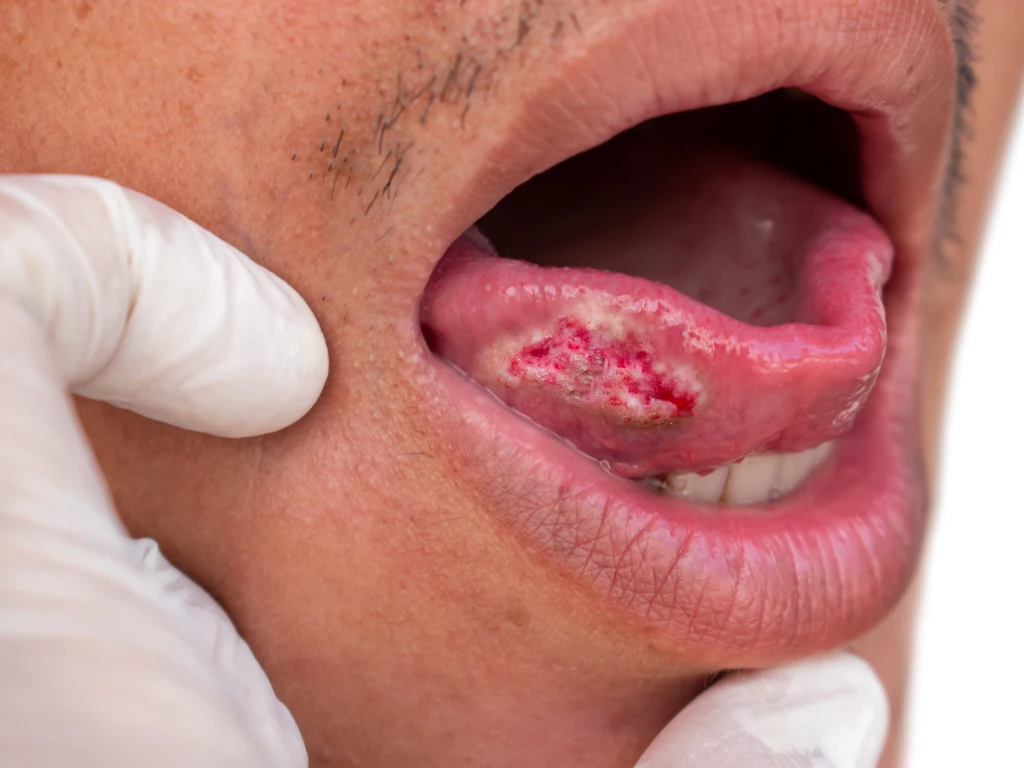
Oral cancer occurs when abnormal cells in the tissues of the mouth grow and divide uncontrollably. It is part of a broader group of cancers known as head and neck cancers.
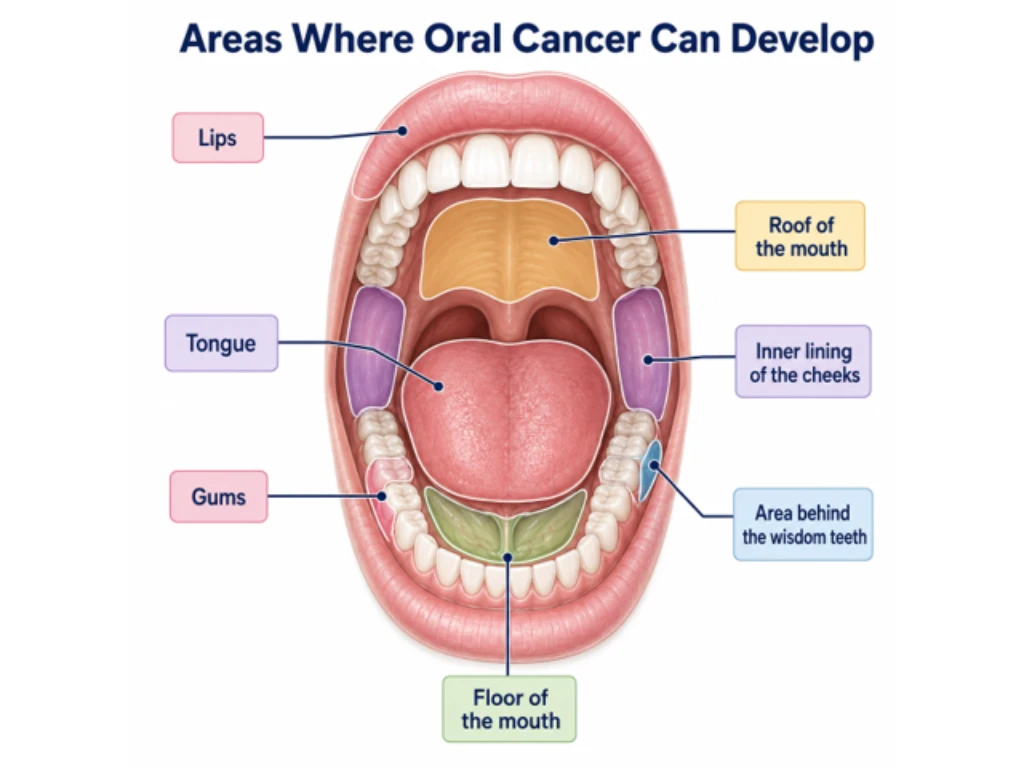
The most common type of oral cancer is squamous cell carcinoma, which develops from thin, flat cells lining the mouth.
What Are the Symptoms of Oral Cancer?
The signs of oral cancer can vary depending on where the cancer develops. Some changes may initially seem minor or resemble common oral conditions in the mouth.
Possible symptoms include:
- A mouth ulcer or sore that does not heal
- A lump or thickened area in the mouth
- Red or white patches in the mouth
- Unexplained bleeding in the mouth
- Persistent pain or tenderness
- Numbness or loss of sensation in the mouth or lips
- Difficulty chewing or swallowing
- Difficulty moving the tongue or jaw
- A persistent sore throat
- Changes in the way your teeth fit together
- A loose tooth without an obvious cause
- A lump in the neck
A mouth ulcer or other changes in your mouth does not necessarily signal cancer. However, if it persists, grows, or changes, it should be assessed by a doctor or dentist.
What Does Oral Cancer Look Like?
Oral cancer can appear in different ways and may not always look like a typical tumour.
It may present as:
- A persistent ulcer
- A red or white patch
- A thickened or raised area
- An unusual lump
- A sore area that bleeds repeatedly
- A change in the appearance of the tongue, gums or other areas of the mouth
Some oral cancers may be painless at first. This is why persistent changes should be checked even when they do not cause significant discomfort.
Who Is at Risk of Oral Cancer?
Oral cancer can affect people of different ages and backgrounds, although the risk generally increases with age.
Your risk may be higher if you smoke, use tobacco products, drink alcohol heavily, or have certain HPV infections.
Long-term exposure to several risk factors can increase the overall risk. However, oral cancer can also occur in people without these risk factors, which is why persistent changes in the mouth should not be dismissed.
How Is Oral Cancer Diagnosed?
If you have a persistent mouth ulcer, lump or other unusual changes, your doctor or dentist will examine the affected area and ask about your symptoms and medical history.
Further investigations may include:
Oral Examination
Your doctor will examine the mouth, tongue, gums and surrounding areas for abnormalities. They may also check the neck for swollen lymph nodes or lumps.
Biopsy
If an area appears suspicious, a biopsy may be recommended. A small sample of tissue is removed and examined under a microscope to determine whether cancer cells are present.
Imaging
Depending on the suspected location and extent of the cancer, imaging such as CT or MRI may be recommended to assess the tumour and surrounding structures.
Further Assessment
If oral cancer is confirmed, additional tests may be performed to determine whether it has spread to nearby lymph nodes or other parts of the body. This helps the medical team determine the most appropriate treatment plan.
Can Oral Cancer Be Prevented?
Not every case of oral cancer can be prevented, but certain lifestyle changes can reduce your risk.
You can lower your risk by:
- Avoiding smoking and tobacco products
- Limiting alcohol consumption
- Avoiding the combination of heavy alcohol consumption with tobacco use
- Practising good oral hygiene
- Protecting your lips from prolonged sun exposure
- Maintaining regular dental check-ups
- Getting persistent mouth changes assessed rather than waiting for them to disappear
When Should I See a Doctor?
Not every mouth ulcer, lump or colour change is a sign of cancer. Many common mouth conditions can cause similar symptoms.
However, you should seek medical or dental assessment if you have a mouth change that does not heal, keeps returning or continues to worsen.
Getting a persistent symptom checked does not mean that you have oral cancer. It simply helps identify the cause and determine whether further investigation is necessary.
Book an AppointmentFrequently Asked Questions (FAQ)
A persistent mouth ulcer, lump, red or white patch, or unexplained change in the mouth can be an early sign. If it does not improve or continues to change, have it assessed.
Most ordinary mouth ulcers heal within a couple of weeks. An ulcer that lasts longer than two weeks or repeatedly returns should be assessed by a doctor or dentist.
Smoking and other tobacco use are important risk factors for oral cancer, particularly when combined with heavy alcohol consumption. However, oral cancer can also occur in people who do not smoke.
Yes. Oral cancer can occur in non-smokers, and factors such as alcohol use, HPV infection, and other individual risk factors may contribute.
If you notice a persistent mouth ulcer, lump or other unusual change, you can start with a GP, family doctor for an initial assessment.
If further investigation or specialist treatment is required, you may be referred to a specialist experienced in oral and head and neck conditions and cancers.
Dr Natascha Putri, General Surgeon at TEN Surgery, has subspecialty expertise in the treatment of conditions affecting the head and neck, including cancers of the nose, mouth and throat.