What is Atypical Lobular Hyperplasia?
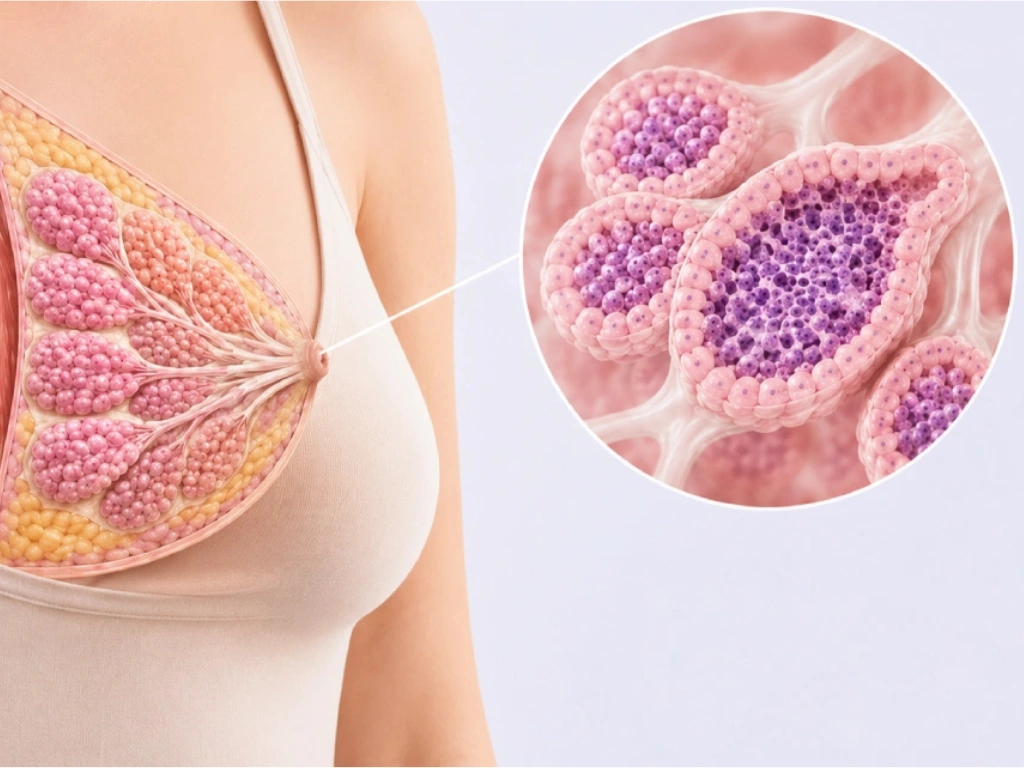
Atypical lobular hyperplasia (ALH) is a benign breast condition involving abnormal cell growth within the lobules of the breast. Although ALH is not breast cancer, it is associated with an increased future risk of breast cancer. Most people with ALH do not have symptoms and the condition is usually discovered incidentally after a breast biopsy.
How Does Atypical Lobular Hyperplasia (ALH) Develop?
The breast is made up of lobules that produce milk and ducts that carry milk to the nipple.
ALH develops when abnormal cells begin to multiply within the lobules. Unlike breast cancer, these abnormal cells remain confined to the lobules and do not invade surrounding breast tissue.
Signs and Symptoms
ALH does not cause usually symptoms and is most often diagnosed after a biopsy performed for:
- Abnormal imaging findings
- Calcifications
- Breast lumps
Causes and Risk Factors
The cause of ALH is not established. Factors that may increase the likelihood of developing ALH include:
- Hormonal influences
- Family history of breast cancer
- Lifestyle factors such as alcohol consumption and obesity
How is ALH Diagnosed?
ALH is usually diagnosed after a core needle biopsy performed to investigate an abnormal breast imaging finding.
Your assessment may include:
- Clinical breast examination
- Mammogram
- Breast ultrasound
- Breast MRI (when appropriate)
- Core needle biopsy
Once ALH is confirmed, your breast surgeon will review whether the biopsy findings match the imaging results. In some cases, additional surgery may be recommended to ensure there is no nearby cancer or a more significant abnormality.
Does Atypical Lobular Hyperplasia Increase the Risk of Breast Cancer?
Yes. Although ALH is not breast cancer, women diagnosed with ALH may have a higher lifetime risk of developing breast cancer compared with the general population.
Importantly:
- ALH does not mean cancer is already present.
- Breast cancer can develop in either breast.
- Many people with ALH never develop breast cancer.
Managing Atypical Lobular Hyperplasia
Treatment Options
Management depends on your radiological findings and biopsy results. Based on your individual situation, treatment options may include:
- Observation with follow-up imaging
- Surgical excision in selected cases
- Regular surveillance and breast cancer risk assessment
Your breast surgeon will advise whether additional treatment or ongoing screening is recommended.
Prevention
Although there is no way to prevent atypical lobular hyperplasia (ALH), maintaining good breast health and attending regular breast screening may help reduce your overall risk of developing breast cancer.
General breast health measures include:
- Maintaining a healthy lifestyle
- Regular exercise
- Limiting alcohol intake
- Participating in appropriate and regular breast screening
When to See a Doctor
Medical assessment is recommended if:
- Breast imaging abnormalities requiring a biopsy are detected
- You have concerns about your breast cancer risk
- You notice new or persistent changes in your breasts
Frequently Asked Questions
No. ALH is a benign breast condition. Although it is associated with an increased future risk of breast cancer, it is not breast cancer.
Yes. ALH is associated with an increased future risk of breast cancer in both breasts.
Not always. Treatment recommendations depend on the imaging findings, biopsy results and overall clinical picture.
Your screening schedule depends on your age, overall breast cancer risk and biopsy findings. Your breast specialist will recommend an individualised follow-up plan.
ALH is not inherited. However, a family history of breast cancer may increase your overall breast cancer risk.
ALH is not usually identified directly on imaging. It is most often diagnosed after a biopsy performed due to an abnormality detected on a mammogram or ultrasound.