What Is Thyroid Cancer?
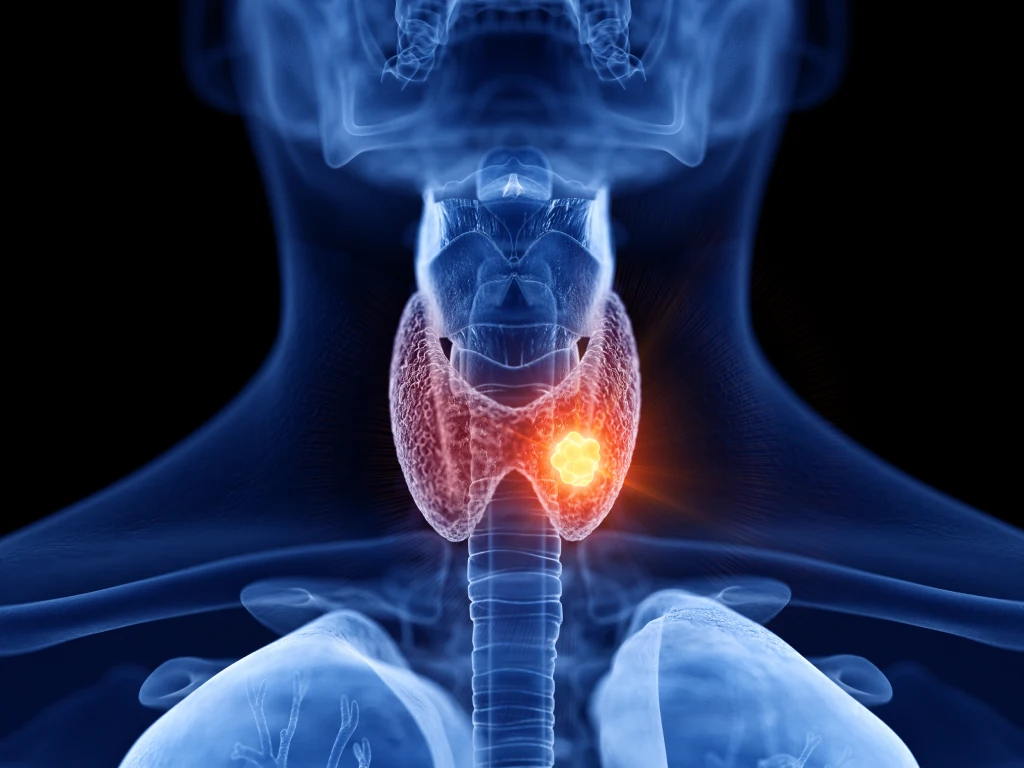
Thyroid cancer develops when abnormal cells in the thyroid gland grow and multiply uncontrollably.
The thyroid gland produces hormones that help support important bodily functions, such as regulating the body's metabolism, heart rate and temperature. There are several types of thyroid cancer:
- Papillary thyroid cancer: The most common type and generally slow growing.
- Follicular thyroid cancer: Another common type that develops from thyroid follicular cells.
- Medullary thyroid cancer: A less common type that develops from specialised thyroid cells called C cells.
- Anaplastic thyroid cancer: A rare and more aggressive type that can grow quickly.
The type of thyroid cancer affects how it is treated and the overall outlook.
What Are the Symptoms of Thyroid Cancer?
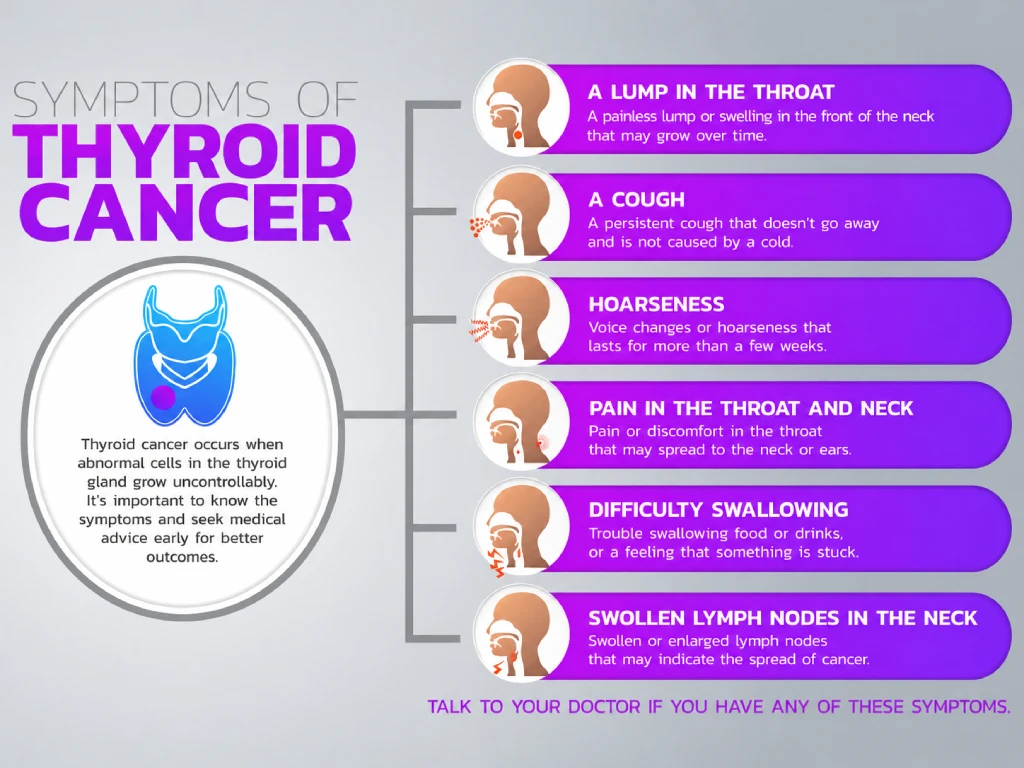
Thyroid cancer does not always cause symptoms in its early stages. It may be discovered during a routine examination or when a thyroid nodule is found on an imaging scan.
Possible symptoms include:
- A lump or swelling at the front of the neck
- A thyroid nodule that increases in size
- Persistent neck pain
- Pain that may extend towards the ears
- Difficulty swallowing
- Difficulty breathing
- A persistent cough without an obvious cause
- Hoarseness or a change in your voice
- Swollen lymph nodes in the neck
Most thyroid nodules are not cancerous. However, a new or changing lump in the neck should be assessed by a doctor.
What Does a Thyroid Cancer Lump Feel Like?
A thyroid cancer lump may feel like a firm or hard nodule at the front of the neck. It may be painless and may gradually increase in size.
However, it is not possible to tell whether a thyroid nodule is cancerous simply by feeling it. A physical examination and appropriate investigations are needed to determine what the lump represents.
What Causes Thyroid Cancer?
The exact cause of most thyroid cancers is not known.
Certain factors may increase the risk, including:
- Previous exposure to significant levels of radiation, particularly to the head and neck
- A family history of thyroid cancer
- Certain inherited genetic conditions
- Being female
- Ageing
Having a risk factor does not mean that you will develop thyroid cancer, and some people develop thyroid cancer without any known risk factors.
How Is Thyroid Cancer Diagnosed?
If your doctor finds a thyroid lump or nodule during an examination, they will usually assess its size, location and characteristics before deciding whether further investigation is needed.
Tests may include:
Physical Examination
Your doctor will examine your neck and thyroid gland and may check for enlarged lymph nodes.
Thyroid Ultrasound
An ultrasound uses sound waves to create images of the thyroid. It can show the size and appearance of a nodule and help identify features that may require further assessment.
Fine-Needle Aspiration Biopsy
If a thyroid nodule appears suspicious, fine-needle aspiration (FNA) may be recommended. A thin needle is used to collect cells from the nodule, which are then examined under a microscope.
Blood Tests
Blood tests may be performed to assess how well your thyroid is functioning. These may include thyroid-stimulating hormone (TSH) and other thyroid hormone levels. In certain situations, additional blood tests, such as calcitonin or thyroglobulin, may be recommended depending on the type of thyroid cancer being investigated or monitored.
Further Imaging
Depending on the findings, additional imaging, such as a CT scan, MRI, or radioactive iodine scan, may be recommended to assess the thyroid, nearby lymph nodes, or determine whether the cancer has spread.
Treatments for Thyroid Cancer
Treatment depends on the type and stage of thyroid cancer, the size and location of the tumour, and your individual circumstances.
Surgery
Surgery is a common treatment option for thyroid cancer. Depending on the cancer, this may involve removing a part, or all, of the thyroid gland.
In some cases, nearby lymph nodes may also need to be removed if there is evidence that the cancer has spread.
Radioactive Iodine Therapy
For certain types of thyroid cancer, radioactive iodine may be recommended after surgery. It uses radioactive iodine to destroy remaining thyroid tissue or cancer cells that absorb iodine.
Thyroid Hormone Therapy
After thyroid surgery, some patients need thyroid hormone replacement medication because the body can no longer produce enough thyroid hormone naturally.
Thyroid hormone treatment may also be used in some patients to reduce the stimulation of any remaining thyroid cancer cells.
Other Treatments
For advanced or more aggressive thyroid cancers, additional treatments such as targeted therapy (medications that target specific changes in cancer cells), radiotherapy, or systemic treatments such as chemotherapy may be considered, depending on the type of thyroid cancer.
Your treatment plan will depend on the specific type and characteristics of the cancer.
When Should I See a Doctor?
See a doctor if you notice a new lump or swelling at the front of your neck, particularly if it:
- Is increasing in size
- Feels firm or hard
- Causes difficulty swallowing
- Causes difficulty breathing
- Is associated with persistent hoarseness
- Is accompanied by swollen lymph nodes
- Does not go away
A thyroid lump does not automatically mean cancer. Many thyroid nodules are benign, but an examination can help determine whether further tests are needed.
Book an AppointmentFrequently Asked Questions (FAQ)
A lump or nodule at the front of the neck is one of the most common signs. However, most thyroid nodules are not cancerous.
Many thyroid cancers can be successfully treated, particularly when detected early. Treatment and outlook depends on the type and stage of the cancer.
Thyroid cancer does not usually cause a typical sore throat, but a larger tumour may cause discomfort or pain in the neck or throat. Persistent or unexplained symptoms should be assessed by a doctor.
Yes. Thyroid cancer can sometimes cause hoarseness or changes in the voice if the tumour affects the nerves or structures involved in voice production. A persistent change in your voice, especially when accompanied by a neck lump, should be assessed by a doctor.
If you have been diagnosed with thyroid cancer, you may be referred to a surgeon, endocrinologist or oncologist depending on your condition and treatment needs. Dr Natascha Putri, General Surgeon at TEN Surgery, has subspecialty expertise in treating thyroid as well as head and neck conditions.