What are Accessory Breast Tissue and Accessory Nipples?
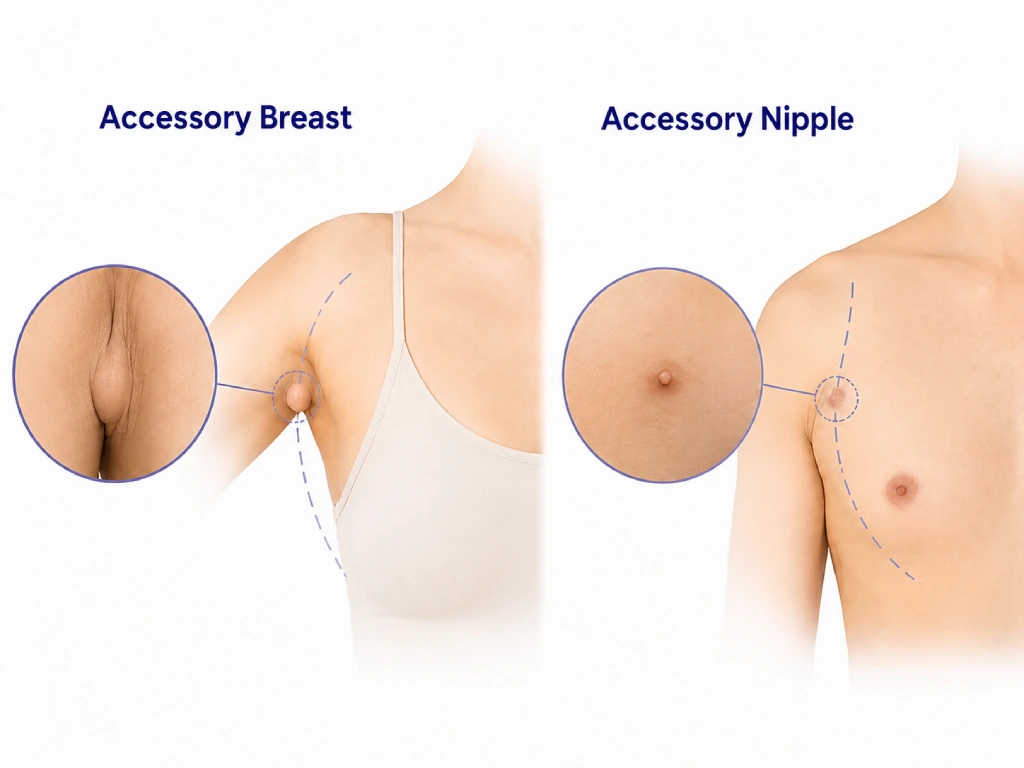
Accessory breast tissue (also known as ectopic breast tissue) is breast tissue that develops outside the normal breast. This most commonly occurs in the armpit (axilla), although it can develop anywhere along the “milk line,” which extends from the armpits to the groin.
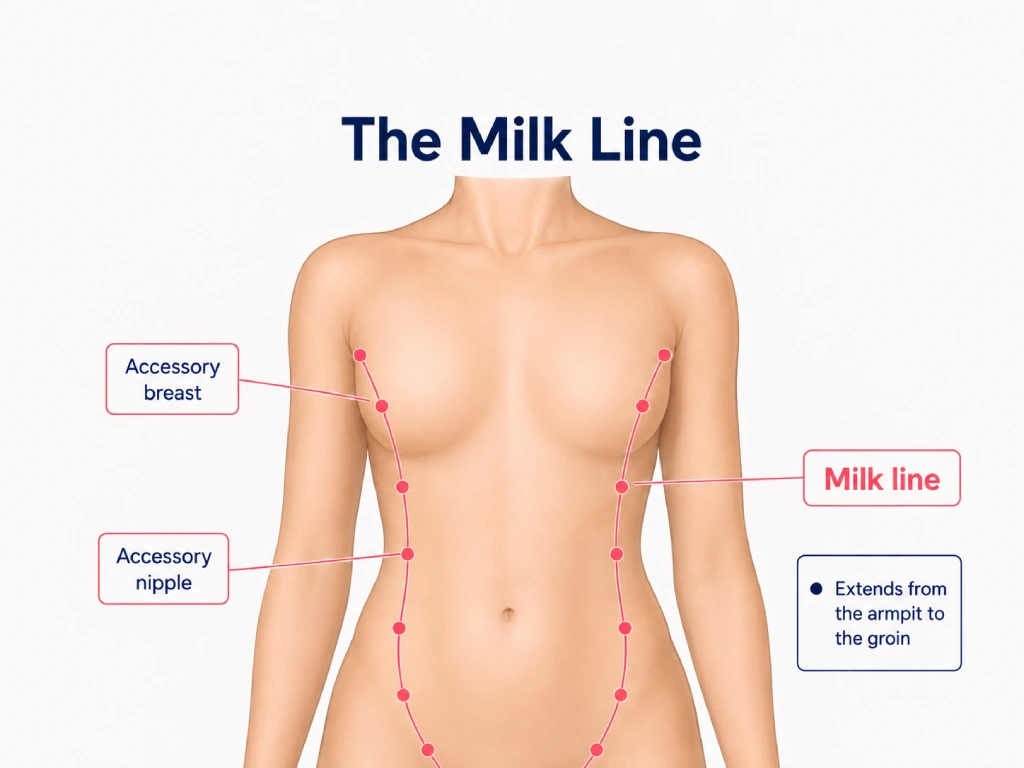
An accessory nipple is a nipple that develops along this same line. It may resemble a small mole or pigmented skin lesion.
Accessory breast tissue and accessory nipples are congenital conditions, which means they are present from birth. However, many people only notice them later in life when hormonal changes cause the tissue to enlarge or become more noticeable.
How Does Accessory Breast Tissue Develop?
Accessory breast tissue develops during early foetal development when embryological breast tissue does not completely regress.
Some people are born with accessory breast tissue or an accessory nipple but may only notice it later due to:
- Hormonal changes
- Puberty
- Pregnancy
- Breastfeeding
- Weight changes
Because accessory breast tissue responds to hormones in the same way as normal breast tissue, it may enlarge, become tender, or even produce milk through an accessory nipple during breastfeeding.
Signs and Symptoms
People with accessory breast tissue or an accessory nipple may notice:
- Fullness, swelling, or a lump in the armpit
- Swelling that fluctuates with the menstrual cycle
- Tenderness or discomfort
- Enlargement of the lump or swelling during pregnancy or breastfeeding
- A small nipple or pigmented skin lesion outside the usual breast area
- Milky discharge from the accessory nipple during breastfeeding
Accessory breast tissue may sometimes be mistaken for enlarged lymph nodes, fatty tissue, or other soft tissue lumps. A medical assessment can help confirm the diagnosis and exclude other conditions.
Accessory Breast Tissue vs Enlarged Lymph Node
| Feature | Accessory Breast Tissue | Enlarged Lymph Node |
|---|---|---|
| Present from birth | Yes | No |
| Enlarges during pregnancy | Often | Uncommon |
| Changes with menstrual cycle | Yes | No |
| Can produce milk | Yes | No |
| Usually feels | Soft or glandular | Firm or rubbery |
Causes and Risk Factors
Accessory breast tissue is a congenital condition present from birth.
Symptoms may become more noticeable with:
- Hormonal fluctuations
- Pregnancy
- Breastfeeding
- Weight gain
Can Accessory Breast Tissue Become Cancerous?
Accessory breast tissue is not cancer. Occasionally, because it contains breast tissue, it can develop the same benign and malignant conditions as normal breast tissue.
These may include:
- Fibroadenomas
- Breast cysts
- Mastitis
- Breast cancer (rare)
For this reason, any new lump, persistent swelling or changes within accessory breast tissue should be assessed by a doctor.
Managing Accessory Breast Tissue and Accessory Nipples
Treatment Options
Treatment depends on symptoms and patient preference.
Observation may be appropriate if the tissue is asymptomatic.
Surgical removal may be considered if:
- There is discomfort
- There are cosmetic concerns
- There is a lump within the accessory breast tissue
Recovery After Surgery
Most patients can return home on the same day and resume light daily activities within a few weeks. Temporary swelling, bruising, and mild discomfort are common and usually improve as healing progresses.
Your doctor will advise when you can return to exercise and other regular activities.
Prevention
Accessory breast tissue cannot be prevented as it develops before birth. However, regular breast self-awareness and attending recommended breast screening can help identify any changes early.
If you notice a new lump or changes in accessory breast tissue, seek medical assessment promptly.
When to See a Doctor
Medical assessment is recommended if you notice:
- A new, enlarging hard armpit lump
- Persistent pain or swelling
- Changes in the overlying skin
As accessory breast tissue can develop the same benign and malignant conditions as normal breast tissue, persistent changes should be assessed.
Book An AppointmentFrequently Asked Questions
Accessory breast tissue itself is not cancerous but breast conditions, including breast cancer, can rarely develop within it.
Yes. Hormonal changes during pregnancy and breastfeeding can cause accessory breast tissue to enlarge or become tender.
Not always. Surgery may be considered when symptoms, continued enlargement or cosmetic concerns are present.
Yes. During breastfeeding, accessory breast tissue may produce milk from accessory nipples because they respond to the same hormones as normal breast tissue.
No. An accessory nipple may resemble a mole but is a congenital structure that develops along the milk line. A doctor can usually distinguish between the two during an examination.