What is Axillary Lymph Node Enlargement?

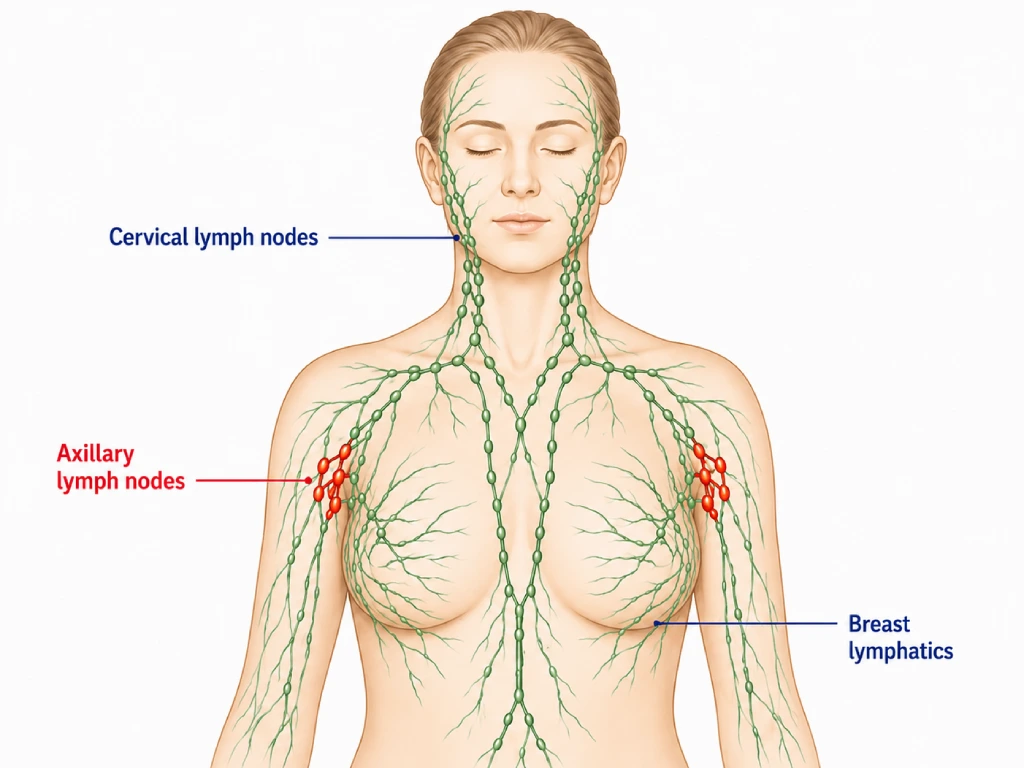
Axillary lymph nodes are lymph nodes within the armpit (axilla).
Lymph nodes are part of the immune system and help the body respond to infection and inflammation.
Lymph node enlargement most commonly occurs due to benign conditions such as infection and vaccination. It is less commonly due to cancer.
How Does Axillary Lymph Node Enlargement Develop?
Lymph nodes may enlarge when the immune cells within them become active. This is a normal response that can occur when the body is reacting to:
- Infection
- Inflammation
- Vaccination
- Skin conditions
- Breast conditions
Occasionally, enlarged axillary lymph nodes may be associated with cancers involving the breast, lymphatic system, or other parts of the body. Further assessment may be recommended to determine the underlying cause.
Signs and Symptoms
People with axillary lymph node enlargement may notice:
- A new lump in the armpit
- Swelling in the armpit
- Tenderness or discomfort
- Enlarged lymph nodes in other parts of the body
In some cases, enlarged lymph nodes do not cause any symptoms and are detected only during imaging tests such as an ultrasound, mammogram, CT scan, or other diagnostic investigations.
Causes and Risk Factors
Common causes of axillary lymph node enlargement include:
- Viral or bacterial infections
Common viral illnesses, such as influenza or the common cold, as well as bacterial skin infections, may cause nearby lymph nodes to enlarge while the immune system responds. - Skin inflammation
Cuts, insect bites, ingrown hairs, or irritation after shaving the underarm can lead to temporary swelling of nearby lymph nodes. - Recent vaccination
Vaccinations stimulate the immune system and may cause temporary swelling of lymph nodes on the same side as the injection. This commonly resolves within a few weeks. - Benign breast conditions
Some non-cancerous breast conditions may also cause reactive enlargement of nearby lymph nodes. - Autoimmune conditions
Autoimmune diseases, such as rheumatoid arthritis or lupus, can cause enlarged lymph nodes due to ongoing inflammation.
Less commonly, axillary lymph node enlargement may be associated with:
- Breast cancer that has spread to the lymph nodes
- Lymphoma
- Leukaemia
- Other cancers that have spread to the lymph nodes
The likelihood of a more serious underlying condition may be higher if the enlarged lymph node is persistent, increasing in size, painless, hard, or fixed in place. A personal history of breast cancer, suspicious breast changes, or enlarged lymph nodes affecting only one side without a clear cause should also be assessed promptly by a doctor.
When Should You Be Concerned?
While most swollen lymph nodes are not cancerous, medical assessment is recommended if the lump:
- Persists for more than three to four weeks
- Continues to enlarge
- Feels hard
- Is fixed and does not move easily
- Is painless without an obvious cause
- Is associated with a breast lump
- Occurs with nipple discharge or skin changes
- Is accompanied by fever, night sweats, or unexplained weight loss
Early medical assessment can help identify the underlying cause and determine whether further investigations or treatment are required.
Managing Axillary Lymph Node Enlargement
Treatment Options
Treatment depends on the underlying cause of the enlarged lymph node. Your doctor may recommend one or more of the following assessments:
- Clinical examination
- Ultrasound of the armpit (axilla)
- Breast or other body imaging, where appropriate
- Blood tests, where appropriate
- Needle biopsy in selected cases
During the examination, your doctor will assess the size, texture, tenderness, and mobility of the lymph node. Imaging studies help determine whether the lymph node has reassuring features or whether further investigation is required.
Prevention
Axillary lymph node enlargement is usually a response to another underlying condition, so it cannot always be prevented.
Seeking early treatment for skin infections, keeping wounds clean, and attending recommended health screening may help identify underlying causes at an earlier stage.
If you are undergoing breast imaging, be sure to inform the clinic if you have recently received a vaccination, including which arm was injected and when the vaccination was given, as this may temporarily affect the appearance of nearby lymph nodes.
When to See a Doctor
Medical assessment is recommended if:
- The lump persists or continues to enlarge
- The lump feels hard or is fixed in place
- There are associated breast symptoms
- You experience unexplained weight loss or fever
- Your symptoms persist for more than a few weeks
You should seek medical advice earlier if you have a personal history of breast cancer or if the armpit lump is associated with a breast lump, nipple changes, or skin changes.
Book An AppointmentFrequently asked questions
No. Most enlarged lymph nodes are caused by benign conditions such as infection, inflammation or immune response.
Yes. Vaccinations can temporarily cause enlarged lymph nodes, particularly in the armpit on the side of injection.
Yes. If the swelling is caused by a minor infection, inflammation or vaccination, it often improves on its own over several weeks as the immune response settles. If the lump persists beyond a few weeks, continues to enlarge or is associated with other concerning symptoms, medical evaluation is recommended.
Deodorant does not usually cause swollen lymph nodes. However, skin irritation or an allergic reaction to deodorant may occasionally lead to local inflammation, which can contribute to temporary lymph node enlargement.
Yes. Small cuts, ingrown hairs or skin infections after shaving the underarm can trigger an immune response, causing nearby lymph nodes to become enlarged and tender. The swelling usually settles once the skin heals.
Not always. Some lymph nodes have reassuring appearances on imaging and can be safely monitored. Biopsy may be recommended if there are suspicious features or persistent enlargement.
Yes, but this is less common than benign causes. Because lymph fluid from the breast drains to the axillary lymph nodes, doctors may recommend breast assessment if there are breast symptoms or suspicious imaging findings.