What Is Robotic Surgery?
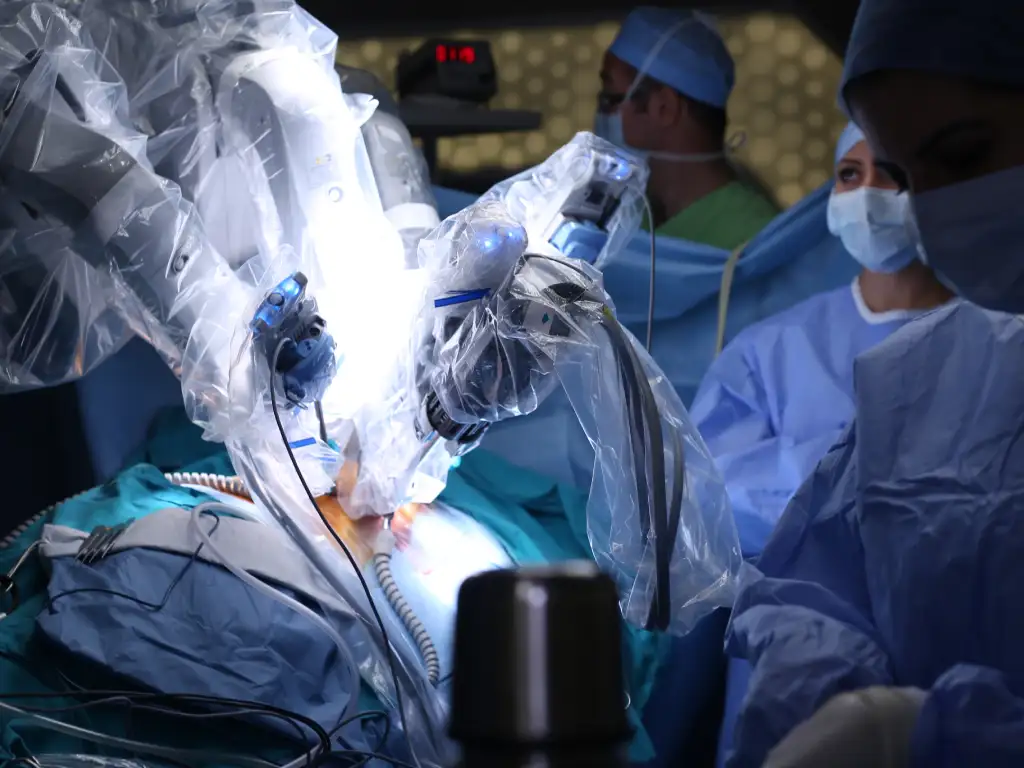
Robotic surgery is an advanced form of minimally invasive surgery that helps surgeons perform complex procedures with greater precision and control. During the operation, the surgeon uses a robotic system to guide surgical instruments inside the body through small incisions.
Robotic surgery does not mean that a robot operates on its own. The surgeon remains fully in control at all times, using the system to enhance accuracy and visualisation during delicate procedures.
How Does Robotic Surgery Work?
Robotic surgery is performed using a specialised system such as the da Vinci surgical robot. The system includes robotic arms, a high definition 3D camera, and a surgeon console.
During the procedure, the surgeon controls the robotic instruments from the console. The system provides:
- Magnified 3D visualisation
- Stable, precise instrument movement
- Enhanced access to confined or hard to reach areas
This technology supports accurate surgical execution while maintaining a minimally invasive approach.
Conditions Treated Using Robotic Surgery
Robotic surgery may be recommended when surgical precision and control are particularly important. It is commonly used for:
- Colorectal surgery especially those involving the rectum
- Complex abdominal or pelvic operations
- Surgery involving confined anatomical spaces
Not all conditions require robotic surgery. Suitability depends on the condition being treated and individual patient factors.
Robotic Surgery vs Other Minimally Invasive Surgery

Robotic surgery is a type of minimally invasive surgery and differs from conventional laparoscopic (keyhole) surgery.
While both approaches use small incisions, robotic surgery offers:
- Greater instrument flexibility
- Enhanced visual depth perception
- Improved precision for complex procedures
These features may be beneficial in selected cases where fine control and detailed visualisation are needed.
Benefits of Robotic Surgery
The benefits of robotic surgery vary depending on the procedure and patient suitability. Potential advantages may include:
- Increased surgical precision
- Reduced trauma to surrounding tissue
- Improved visualisation of surgical areas
- Smoother recovery in suitable cases
Robotic surgery is not required for all patients, but it can offer advantages when appropriately indicated.
Robotic Surgery Techniques Used in Modern Practice

Robotic surgery can be performed using different techniques, depending on the procedure and patient suitability.
- Single-port robotic surgery is an advanced approach where surgery is carried out through a single small incision. This technique may result in fewer scars and reduced tissue disruption for selected patients.
- Multi-port robotic surgery uses several small incisions and is the most commonly used robotic approach. It allows greater instrument flexibility and precision, making it suitable for complex abdominal and pelvic procedures.
Other robotic-assisted techniques may combine robotic and minimally invasive methods to tailor the operation to the patient’s condition.
The choice of robotic technique depends on surgical complexity, anatomy, and clinical goals, and is determined after specialist assessment.
Recovery After Robotic Surgery
Recovery after robotic surgery depends on the type of procedure performed, but it usually follows a similar pattern to other minimally invasive surgeries. Most patients experience a shorter hospital stay and are able to resume light activities sooner than with traditional open surgery.
Your surgeon will provide personalised recovery advice based on your procedure and overall health.
Book an AppointmentFrequently Asked Questions
No. In robotic surgery, the surgeon remains fully in control at all times. The robotic system does not make decisions or act independently. It translates the surgeon’s hand movements into precise actions inside the body.
No. Robotic surgery is used selectively. It is recommended only when it offers clear advantages for a specific procedure, such as improved precision or access in confined areas.
Robotic systems provide enhanced visualisation and instrument control, which can improve precision for complex procedures. Surgical outcomes still depend on appropriate case selection and the surgeon’s experience.
Robotic surgery uses small incisions similar to other minimally invasive techniques, which generally results in smaller scars compared to open surgery.
Robotic surgery is a well established technique used worldwide. When performed by trained surgeons and with proper patient selection, it is considered a safe approach for suitable procedures.
Available at

TEN Surgery Group (Gleneagles)


TEN Surgery Group (Mount Elizabeth)