What is Atypical Ductal Hyperplasia?
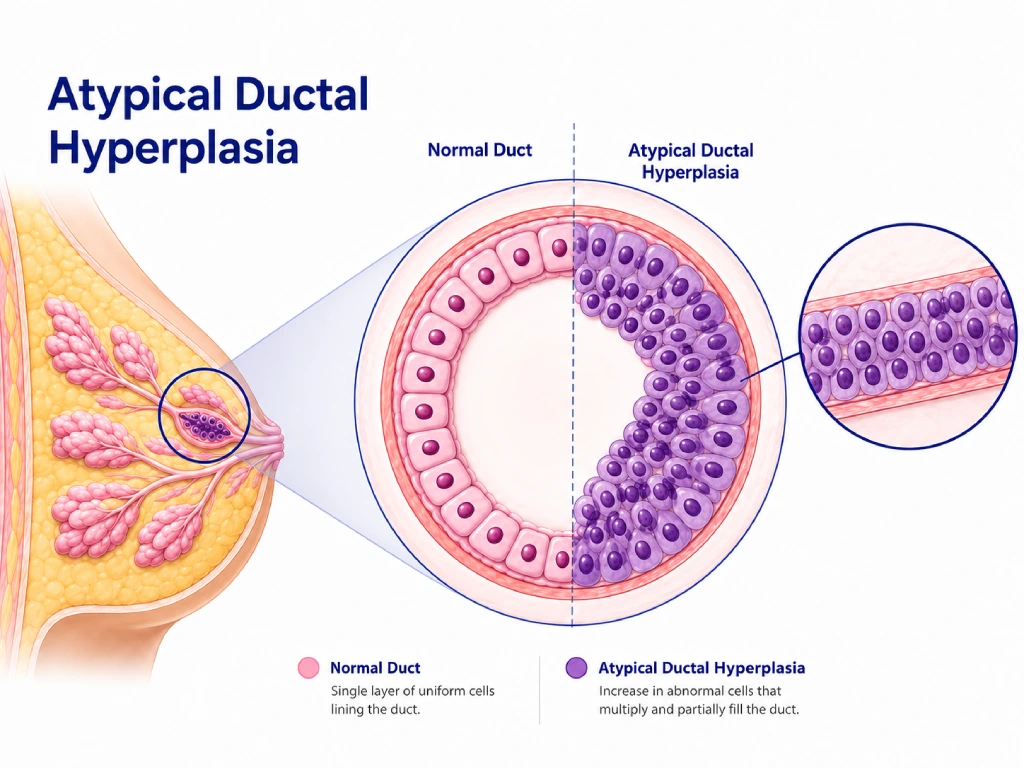
Atypical ductal hyperplasia (ADH) is a benign breast condition in which abnormal cells develop within the breast ducts. ADH is not breast cancer, but it is considered a “high-risk” breast lesion because it is associated with an increased risk of developing breast cancer.
ADH is usually detected on biopsy performed after abnormal breast imaging or in surgical excision specimens of other breast lesions. Although ADH is benign, it can sometimes appear similar to early breast cancer under the microscope. For this reason, further assessment may be recommended after ADH is diagnosed.
How does Atypical Ductal Hyperplasia (ADH) Develop?
ADH develops when ductal breast cells begin to grow in an abnormal pattern. The exact reason why this occurs is not fully understood although hormonal and genetic factors may play a role.
Signs and Symptoms of Atypical Ductal Hyperplasia
Atypical ductal hyperplasia (ADH) does not usually cause any symptoms. It is most commonly detected incidentally following a breast biopsy performed to investigate:
- Mammographic calcifications
- Abnormal findings on a breast ultrasound or MRI
- Another breast abnormality
Causes and Risk Factors of Atypical Ductal Hyperplasia
Factors associated with atypical ductal hyperplasia (ADH) may include:
- Increasing age
- Hormonal influences
- A family history of breast cancer
- A personal history of breast disease
Having ADH does not mean you will develop breast cancer. However, it does mean your doctor may recommend closer monitoring, additional investigations, or further treatment based on your overall breast cancer risk profile.
How is Atypical Ductal Hyperplasia diagnosed?
ADH is diagnosed through a breast biopsy. This may be done after breast imaging shows an area that requires further assessment. A pathologist examines the breast tissue sample under a microscope to look at the pattern and appearance of the cells.
If ADH is found on a core needle biopsy, your doctor will review whether the imaging findings and biopsy results match. This helps determine whether observation, further biopsy or surgical excision is needed.
Managing Atypical Ductal Hyperplasia
Management depends on the biopsy findings, imaging appearance, and your individual breast cancer risk.
Treatment Options
Treatment recommendations are based on the biopsy findings and imaging appearance. Depending on your individual situation, management options may include:
- Surgical excision to exclude the presence of cancer
- Breast surveillance with regular imaging
- Risk-reducing medications in selected patients
Surgical excision does not mean that atypical ductal hyperplasia (ADH) is cancer. It may be recommended because a needle biopsy only samples part of the abnormal area. Removing additional tissue allows your doctor to determine whether more significant changes or an early cancer are present nearby.
Prevention
There is currently no known way to prevent atypical ductal hyperplasia (ADH). However, maintaining good breast health may help reduce your overall risk of developing breast cancer.
General breast health measures include:
- Maintaining a healthy body weight
- Regular exercise
- Limiting alcohol intake
- Attending appropriate breast screening
- Reporting new breast changes promptly
While these measures cannot eliminate the risk completely, they can support overall breast health and encourage early detection of any abnormalities.
When to see a Doctor
See a specialist if:
- You have abnormal breast imaging
- You were advised to undergo breast biopsy
- You have a strong family history of breast cancer
- You notice a new breast lump, nipple discharge or changes in the breast
Frequently asked questions
No. ADH is not cancer, but it is associated with a higher risk of developing breast cancer in future. It may be associated with adjacent breast cancer which is detected after surgical excision.
Surgical excision is usually recommended to exclude adjacent cancer. In select cases, close surveillance after biopsy may suffice. Recommendations depend on the biopsy findings, imaging appearance and overall clinical assessment.
Yes. Women with ADH have a higher lifetime risk of developing breast cancer compared to the general population. It is a marker of risk but not a diagnosis of breast cancer or a guarantee of developing cancer.
ADH does not usually “go away” on its own. It is a tissue finding diagnosed on biopsy. Your doctor may recommend surgery or follow up imaging depending on the results.