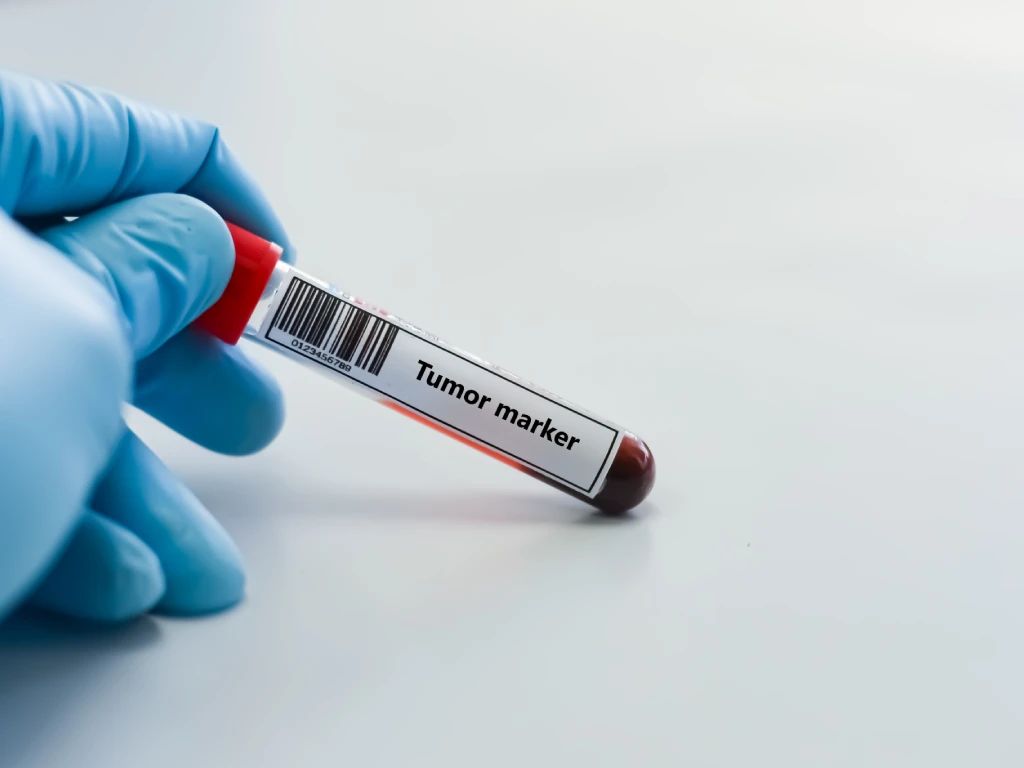
Cancer remains the leading cause of death in Singapore, making cancer prevention, and regular screening an important part of one’s lifestyle habits. But when it comes to cancer detection, not every test is suitable for every individual, and a blood test does alone is not a definitive yes-or-no indication of cancer.
If your doctor has recommended a tumour marker test, you may be wondering what the result can actually tell you. If the tumour marker(s) is high, does that mean cancer is present? And if the result is normal, does that mean cancer has been ruled out?
Some tumour markers may help support a cancer investigation, while others are more useful for monitoring a known cancer, assessing response to treatment or checking for possible recurrence. Their sensitivity and specificity also vary, meaning a marker may not detect every known cancer and results may sometimes be elevated for reasons unrelated to cancer.
Specialists such as Dr Natascha Putri (Senior Consultant Head & Neck Surgeon) therefore interpret tumour marker results alongside a patient’s symptoms, medical history, along with a physical examination and other required investigations such as imaging, endoscopy, biopsy and pathology, where appropriate. This broader approach helps put a blood test result into the right clinical context.
What Are Tumour Markers?
Tumour markers are substances that may be produced by cancer cells or by the body in response to cancer. They can include proteins, enzymes, or other biological substances that can be measured in the blood and, in some cases, other body fluids or tissues.
Some commonly known tumour markers include:
- CA-125, which may be associated with ovarian cancer
- CA 19-9, which may be associated with pancreatic and other gastrointestinal cancers
- CEA (carcinoembryonic antigen), which may be used to check for gastrointestinal, thyroid, breast, lung and even ovarian cancers
- AFP (alpha-fetoprotein), which may be relevant in liver cancer and some germ cell tumours
- PSA (prostate-specific antigen), which is associated with the prostate and may be used in the assessment of prostate cancer
Tumour markers can also have a role in detecting certain thyroid cancers, although their use depends on the specific type of thyroid cancer and the clinical situation. For example, thyroglobulin may be used to monitor some patients after treatment for differentiated thyroid cancer, while calcitonin may be relevant when medullary thyroid cancer is being considered.
For most head and neck cancers, there is no single blood tumour marker that can reliably diagnose cancer. Doctors generally rely on a combination of clinical examination, imaging and, when appropriate, tissue sampling or biopsy to establish a diagnosis.
Importantly, tumour markers are not exclusive to cancer. A marker can sometimes be elevated because of a non-cancerous condition, inflammation, or other factors.
For this reason, a tumour marker blood test should not be viewed as a simple “cancer test” that gives a yes-or-no answer. Its usefulness depends on the specific marker, the cancer being considered, and the reason the test was ordered.
How Accurate Are Tumour Marker Tests?
There is no single accuracy rate that applies to all tumour marker tests. Doctors will look at sensitivity and specificity when assessing a tumour marker test result.
What Is Sensitivity?
Sensitivity refers to how well a test can identify people who have a particular disease.
If a tumour marker has low sensitivity for a particular cancer, it may miss some people who actually have that cancer. In other words, a person can have cancer even if their tumour marker results are normal.
What Is Specificity?
Specificity refers to how well a test can identify people who do not have a particular disease.
If a tumour marker has low specificity, it may be elevated in people who do not have cancer. This can happen because some tumour markers can also be affected by non-cancerous conditions or other medical factors.
What Does This Mean for Your Result?
This is why a tumour marker result needs to be interpreted in context:
- A normal result does not necessarily rule out cancer.
- An elevated result does not necessarily mean cancer is present.
Your doctor will consider the tumour marker results together with the symptoms you present with, medical history, physical examination observations and, where appropriate, other diagnostic results from imaging, endoscopy or biopsy.
The significance of a tumour marker result therefore depends on which marker was tested, which cancer is being considered and the individual patient's clinical circumstances.
What Can Cause an Elevated Tumour Marker?
An elevated tumour marker can understandably be worrying, but there are several possible explanations.
Depending on the marker, levels may rise because of:
- Benign or non-cancerous conditions
- Inflammation or infection
- Liver or other organ conditions
- Certain medications or medical conditions
- Smoking or other lifestyle factors
- Cancer
This is one reason doctors do not usually interpret a tumour marker result in isolation.
For example, an elevated result may prompt a doctor to look more closely at a patient's symptoms, medical history, or other test results. In some situations, the test may be repeated to see whether the level remains elevated or changes over time.
The same principle applies to a normal result. If a patient has symptoms or other findings that are concerning, a normal tumour marker would not necessarily end the investigation.
Can Tumour Markers Diagnose Cancer?
Usually, it does not. A tumour marker may contribute useful information during a cancer investigation, but it is generally not used as a standalone diagnostic test for cancer.
This is important because cancer is not one single disease. Different cancers behave differently, and not every cancer produces a tumour marker that can be reliably measured in the blood.
Depending on the suspected cancer, diagnosis may involve a combination of:
- Medical history and physical examination
- Blood or other laboratory tests
- Ultrasound, CT, MRI or other imaging
- Endoscopy or other specialist investigations
- Biopsy and pathology
A biopsy, when appropriate, allows tissue to be examined for abnormal or cancerous cells and can provide information that a blood test alone cannot.
When Are Tumour Markers Useful?

Although tumour markers have limitations, they can still play an important role in cancer care.
Supporting a Cancer Investigation
When a doctor is already assessing a patient for a particular cancer, a tumour marker may provide additional information alongside other clinical findings.
The test is therefore often more useful when there is already a specific clinical question rather than when it is used randomly as a general health check.
Monitoring Treatment
For some cancers, doctors may monitor tumour marker levels during treatment.
Changes over time can sometimes provide an indication of how the cancer is responding to treatment. However, the result still needs to be interpreted alongside the patient's symptoms, examination, and other investigations.
Monitoring for Recurrence
After treatment, certain tumour markers may be measured periodically in selected cancers to look for changes that could suggest recurrence.
Again, the usefulness varies considerably depending on the type of cancer and the marker being used.
The Bottom Line: Tumour Markers Are One Piece of the Picture
Tumour marker blood tests can be useful tools in the right clinical setting, particularly when supporting an investigation, monitoring treatment or following certain cancers after treatment. However, they are not a universal cancer test.
If you have been advised to undergo a tumour marker test or are concerned about an abnormal result, speak with your doctor about what the test is intended to assess and whether further investigation is needed. Dr Natascha Putri (Senior Consultant General and Head & Neck Surgeon at TEN Surgery Group), provides assessment and surgical management for a range of conditions, including general surgical and head and neck conditions.
The goal is not simply to get a blood test result, it is to understand what that result means for you.
Frequently Asked Questions
1. Can a tumour marker blood test detect cancer?
A tumour marker test may provide useful information in certain situations, but it generally cannot diagnose cancer on its own. Doctors may use the result alongside symptoms, examination, imaging, biopsy, and other investigations.
2. Does a high tumour marker mean I have cancer?
Not necessarily. Tumour markers can sometimes be elevated because of non-cancerous conditions, inflammation, or other factors. An elevated result needs to be interpreted in the context of your overall health and other test findings.
3. Can you have cancer despite a normal tumour marker?
Yes. A normal tumour marker does not necessarily rule out cancer. Not every cancer produces a measurable tumour marker, and some people with cancer may have normal levels.
4. What can cause tumour markers to be high?
Tumour markers can be elevated for reasons other than cancer. Depending on the specific marker, causes may include inflammation, infection, benign conditions, or other medical factors.
5. Should I get a tumour marker test as part of a health screening?
Not necessarily. Tumour marker tests are not suitable as a general screening test for all cancers. Your doctor can advise whether a particular test is appropriate based on your age, medical history, symptoms, and individual risk factors.
6. What happens if my tumour marker results are abnormal?
An abnormal result does not automatically mean that you have cancer. Your doctor may recommend repeating the test or carrying out further assessment, such as imaging, endoscopy, or biopsy, depending on the marker and your clinical situation.
7. How long does it take to get tumour marker test results?
The turnaround time varies depending on the specific tumour marker and laboratory. Your healthcare provider can advise you when your result is expected and arrange a follow-up to discuss what it means.
Related Doctor

Dr Natascha Putri
Senior Consultant Head & Neck Surgeon MBBS (Singapore), MMed (Surgery), MRCS (Edinburgh), FRCS (Edinburgh)Related Clinic

TEN Surgery Group (Mount Elizabeth)


TEN Surgery Group (Gleneagles)