What is Breast Cancer?

Breast cancer occurs when abnormal changes develop in breast cells, causing them to grow uncontrollably and form a tumour.
While it is the most common cancer affecting women worldwide, outcomes have improved significantly with earlier detection and advances in treatment.
Types of Breast Cancer
Breast cancer can arise in different parts of the breast, most commonly within milk ducts or lobules. Some breast cancers remain confined to the ducts (ductal carcinoma in situ), while others may spread into surrounding breast tissue or beyond the breast.
Different types of breast cancer are based on which breast cells become cancerous. The main types include:
- Ductal Carcinoma: Arises from the lining of the milk ducts and is the most common type of breast cancer
- Lolubar Carcinoma: Cancer arising from the lobules (milk-producing glands). This type may be more difficult to detect on routine imaging and can sometimes affect both breasts.
- Inflammatory Breast Cancer: A rare but aggressive form of breast cancer in which cancer cells block lymphatic vessels in the skin causing redness, swelling, warmth and skin thickening.
- Paget's Disease of the Breast: A rare condition affecting the nipple and areola that may present with crusting, scaling or eczema-like skin changes
Breast cancer staging is based on the size of the tumour and whether it has spread to lymph nodes or other parts of the body. Early-stage breast cancer is often highly treatable with good outcomes.
Causes and Risk Factors
Breast cancer occurs when changes (mutations) in the DNA of breast cells cause them to grow and divide abnormally. Several factors may increase the risk, including:
- Increasing age
- Strong family history of breast or ovarian cancer
- Certain inherited genetic conditions (e.g. BRCA1 and BRCA2)
- Hormonal factors (use of medications containing estrogen)
- Known history of high-risk breast lesions
- Previous radiation exposure to the breast or chest
- Lifestyle factors such as obesity, smoking, alcohol consumption, and lack of exercise
Signs and Symptoms
Breast cancer may not cause symptoms in its early stages. When symptoms do occur, they may include:
- Hard or growing lump in the breast
- Skin thickening or dimpling
- New inversion of the nipple
- Nipple discharge (especially if blood-stained)
- Persistent or worsening rash around the nipple and areola
- Lump in the underarm
Most breast lumps are not cancerous. Nonetheless, it is advisable to have any new or persistent breast change assessed by a doctor.
Managing Breast Cancer
A breast cancer diagnosis can feel overwhelming. Advances in screening and treatment have significantly improved outcomes for many patients. Early detection, assessment and treatment are important in improving long-term outcomes.
Breast Cancer Diagnosis
Breast cancer is evaluated through a combination of clinical examination, breast imaging and tissue sampling (biopsy).
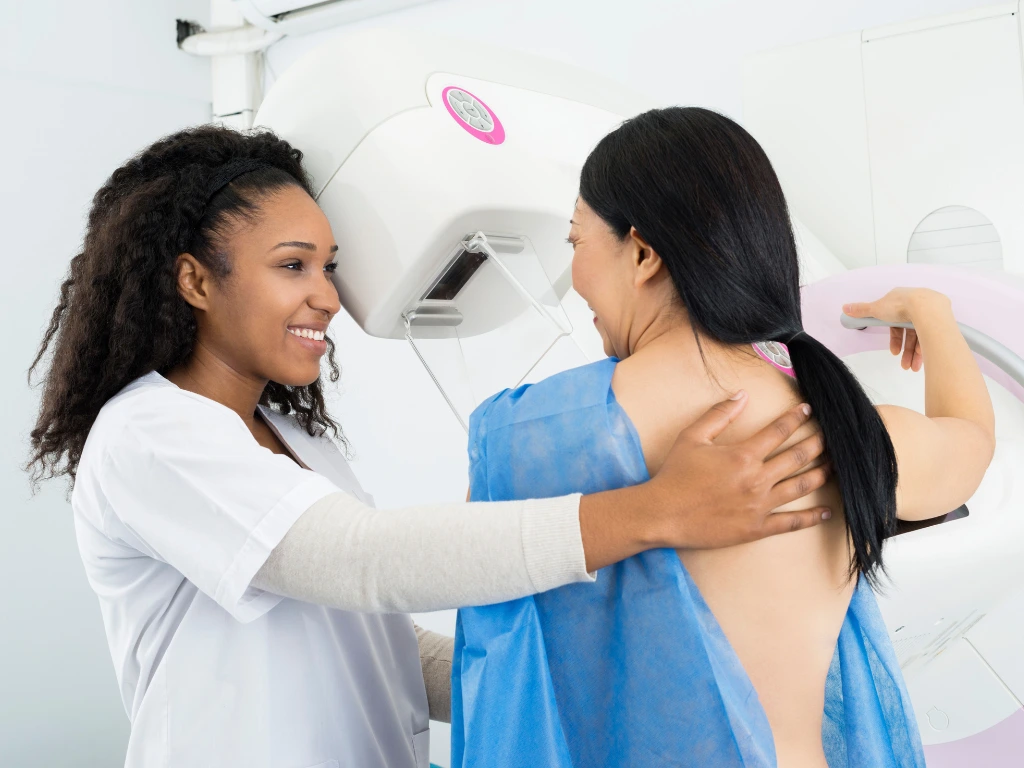
Common investigations include:
- Mammogram: A quick procedure performed under local or general anaesthesia to release pus and relieve pressure
- Breast ultrasound: Used to assess breast lumps particularly in younger patients with denser breasts
- Breast ultrasound: Used to assess breast lumps particularly in younger patients with denser breasts
- Breast MRI: Used in selected patients to further evaluate the extent of disease
- Breast Biopsy: A procedure used to obtain tissue samples for microscopic analysis to confirm a diagnosis
Not all breast lumps or abnormal imaging findings are cancerous. Further assessment is often required before a diagnosis can be confirmed.
Treatment Options
Treatment recommendations are individualised according to the type of breast cancer, stage, and the patient’s health and preferences. Many patients require a combination of treatments.
Surgery:
- The primary treatment to remove the tumour and assess the axillary lymph nodes for cancer spread
- Surgical options broadly include breast conserving surgery (wide local excision or lumpectomy) and mastectomy. In selected patients, breast reconstruction may be performed at the same time.
- The use of oncoplastic and minimally invasive techniques may allow selected patients to achieve good cancer control while preserving breast shape and improving cosmetic outcomes.
Chemotherapy:
- Chemotherapy uses systemic medication to destroy cancer cells.
- It can be given before surgery to shrink certain cancers or after surgery to reduce the risk of the cancer returning.
- In advanced breast cancer, systemic therapy may play the main role in disease control.
Targeted therapy / immunotherapy:
- Targeted therapy acts against specific molecular features of breast cancer cells
- Immunotherapy helps the immune system recognise and attack cancer cells
- These treatments are used in selected patients depending on the subtype and characteristics of the breast cancer
Hormonal therapy:
- Some breast cancers grow in response to hormones such as estrogen
- Hormonal therapy works by reducing estrogen levels or blocks the effect of estrogen on cancer cells.
- These medications may help to reduce the risk of cancer relapse and are often taken for several years as part of long-term treatment
Breast Cancer Screening
Screening recommendations vary according to age, breast density, family history and overall breast cancer risk profile.
Breast cancer screening may be conducted using the following methods:
- Clinical breast examination
- Mammogram
- Breast ultrasound
- Breast MRI in selected patients e.g. individuals with known hereditary breast cancer risk
- Breast Biopsy: A procedure used to obtain tissue samples for microscopic analysis to confirm a diagnosis

Prevention
You may not be able to prevent breast cancer, but you can reduce your risk through the following measures:
- Mantain a healthy weight
- Engage in regular physical activity
- Limit alcohol intake
- Avoid smoking
- Be mindful of long-term hormone therapy use
- Attend regular screening (e.g. mammograms)
- Be familiar with the normal appearance and feel of your breasts through regular breast self-examination
- Seek medical advice if there is a strong family history of cancer
When To See A Doctor
You should seek medical attention if you notice new or persistent changes in your breasts such as:
- A new breast lump
- A change in appearance of the breast skin or nipple
- Nipple discharge, especially if bloody or spontaneous
- A new lump in the underarm
Frequently Asked Questions
Yes. Most breast lumps are non-cancerous (benign). It is advisable to have any new breast lump assessed by a doctor to confirm if it is benign or cancerous.
Yes. While breast cancer is more common in women older than 50, younger women can develop breast cancer.
Although this occurs very rarely, men can develop breast cancer and should seek medical attention if they notice any breast changes.
Some breast cancers are linked to inherited gene mutations such as BRCA1 and BRCA2, but most cases occur in individuals without a strong family history or a hereditary condition.
No, breast cancer is often painless in the early stages. This is why regular screening and awareness are important.
Breast screening usually starts at age 40 but in certain individuals with higher risk, screening may start earlier.