
Seeing blood in your stool can be unsettling. Whether it appears as bright red streaks on the toilet paper, blood in the toilet bowl, or black, tarry stools, it is natural to wonder what is causing it and whether it is something serious.
The truth is that blood in stool can happen for many reasons. Common problems such as haemorrhoids and anal fissures are among the most frequent causes. However, bleeding from the digestive tract can sometimes be a sign of a more significant underlying condition, including colorectal polyps, inflammatory bowel disease, or colorectal cancer.
Understanding what the colour, amount, and accompanying symptoms may indicate can help you decide when to seek medical advice.
What Does Blood in Stool Mean?
Blood in stool refers to bleeding somewhere along the digestive tract. The digestive tract begins at the mouth and extends through the oesophagus, stomach, intestines, rectum, and anus.
The colour and appearance of the blood can sometimes provide clues about where the bleeding is coming from.
Bright Red Blood in Stool
Bright red blood usually suggests bleeding from the lower part of the digestive tract, particularly the rectum or anus.
You may notice:
- Blood on the toilet paper after wiping
- Blood coating the surface of the stool
- Blood dripping into the toilet bowl
- Bright red streaks mixed with stool
Blood Mixed Within the Stool
When blood appears mixed throughout the stool rather than on its surface, the source of bleeding may be higher within the colon. This may require further investigation to identify the cause.
Melena (Black Stool)
Melena refers to black, tarry, and often foul-smelling stools. This occurs when blood has been digested as it passes through the digestive system.
Black stool may indicate bleeding higher up in the digestive tract, such as the stomach or small intestine. Because melena can sometimes indicate significant bleeding, medical evaluation is generally recommended.
Why Do I Have Blood in Stool?
One of the most common questions patients ask is, “Why do I have blood in my stool?”
The answer depends on the source of the bleeding. Some of the more common reasons for blood in stool include:
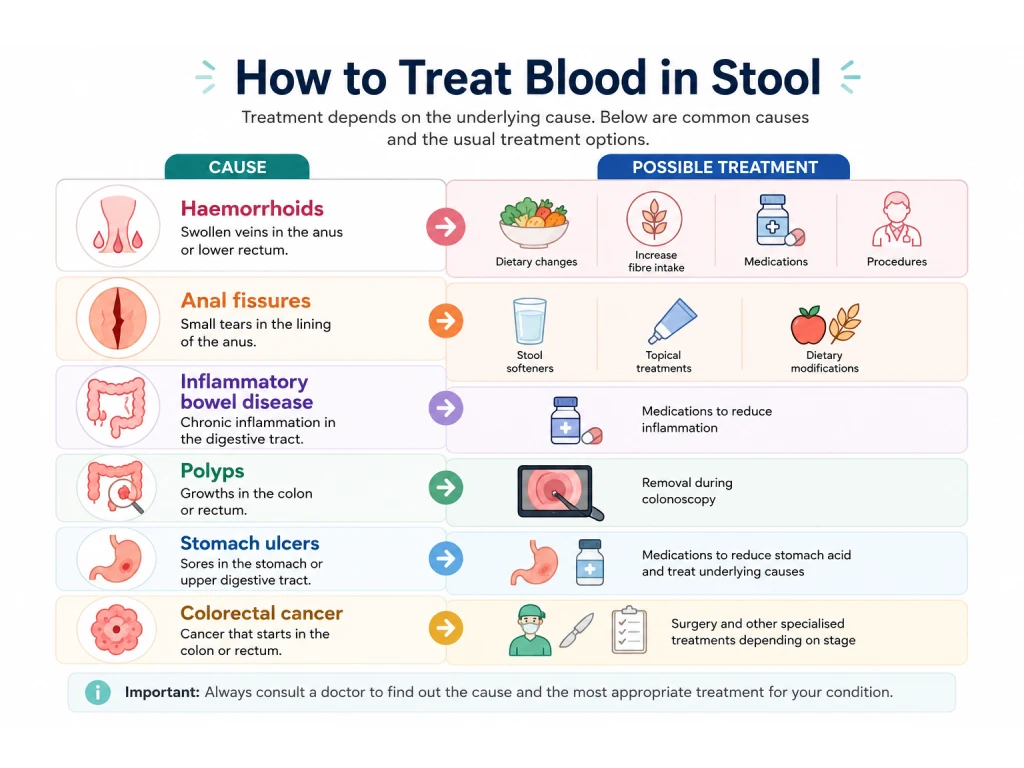
Haemorrhoids
Haemorrhoids are swollen veins around the anus or lower rectum. They are one of the most frequent causes of bright red blood in stool.
Bleeding from haemorrhoids is often noticed after bowel movements and may appear on toilet paper or in the toilet bowl. Some people also experience itching, discomfort, or a lump near the anus.
Anal Fissures
An anal fissure is a small tear in the lining of the anus, often caused by passing hard stools or chronic constipation. Anal fissures may cause:
- Sharp pain during bowel movements
- Bright red bleeding
- Burning or discomfort after passing stool
Diverticular Disease
Small pouches called diverticula can develop in the walls of the colon, particularly with age.
Sometimes these pouches can bleed suddenly, resulting in noticeable amounts of blood in the stool or toilet bowl. While many episodes resolve on their own, some require urgent medical attention.
Inflammatory Bowel Disease
Inflammatory bowel disease (IBD), including ulcerative colitis and Crohn's disease, causes chronic inflammation of the digestive tract.
In addition to blood in stool, symptoms may include:
- Abdominal pain
- Persistent diarrhoea
- Weight loss
- Fatigue
Polyps and Colorectal Cancer
Polyps are growths that develop on the inner lining of the colon or rectum. While many are benign, some can develop into cancer over time.
Both colorectal polyps and colorectal cancer can cause visible or hidden bleeding within the stool.
Because bleeding may be one of the earliest warning signs, persistent rectal bleeding should never be ignored.
Stomach Ulcers and Upper Digestive Tract Bleeding
Ulcers in the stomach or upper digestive tract can cause bleeding that results in melena or black stool.
This type of bleeding may also be associated with symptoms such as upper abdominal discomfort, dizziness, or fatigue.
While the appearance of blood cannot confirm the cause, it can sometimes provide clues about where the bleeding is coming from.
| Appearance | Possible Causes |
|---|---|
| Bright red blood on toilet paper or in the toilet bowl | Haemorrhoids, anal fissures, rectal inflammation |
| Bright red blood coating the stool | Haemorrhoids, anal fissures, lower rectal bleeding |
| Blood mixed within the stool | Colorectal polyps, inflammatory bowel disease, colorectal cancer, diverticular disease |
| Dark red or maroon-coloured stool | Bleeding from the colon or small intestine |
| Black, tarry stools (melena) | Stomach ulcers, upper gastrointestinal bleeding, bleeding from the stomach or small intestine |
It is important to note that the colour and appearance of blood alone cannot determine the exact cause. Any persistent, recurrent, or unexplained bleeding should be assessed by a doctor.
Blood in Stool Symptoms to Watch For
The bleeding itself is only part of the picture. Doctors also look for other symptoms that may help determine the cause.
Common blood in stool symptoms include:
- Changes in bowel habits
- Persistent diarrhoea or constipation
- Abdominal pain or cramping
- Unexplained weight loss
- Fatigue
- Dizziness or fainting
- A feeling of incomplete bowel emptying
If blood in stool occurs together with any of these symptoms, further evaluation may be necessary.
When Should You See a Doctor?
Not every episode of rectal bleeding is an emergency. However, it is important not to assume that blood in stool is harmless without understanding the cause.
You should arrange a medical consultation if:
- Bleeding happens repeatedly
- The amount of blood increases
- You notice black or tarry stools
- You have a family history of colorectal cancer
- You experience weight loss or changes in bowel habits
- You are over 50 and develop new rectal bleeding
- The bleeding persists despite treatment for haemorrhoids or constipation

Seek urgent medical attention if:
- There is heavy bleeding
- You feel faint or dizzy
- You develop severe abdominal pain
- You experience weakness or shortness of breath
How Is Blood in Stool Investigated?
If bleeding is persistent, recurrent, or accompanied by warning signs, your doctor may recommend further evaluation.
Investigations may include:
- Review of symptoms and medical history
- Physical examination
- Blood tests
- Stool tests
- Imaging studies
- Colonoscopy
A colonoscopy allows the doctor to examine the lining of the colon and rectum for polyps, inflammation, bleeding sources, or other abnormalities.
Early investigation can help identify treatable conditions before they become more serious.
Don’t Ignore Blood in Stool
Finding blood in your stool can be worrying, but it is not something that should be dismissed or ignored.
If you continue to notice blood in your stool or experience symptoms such as weight loss, changes in bowel habits, abdominal pain, or fatigue, seeking medical advice is recommended.
At TEN Surgery Singapore, Dr Eugene Yeo, Dr Ng Kheng Hong, and Dr Toh Ee-Lin provide specialist evaluation and management for a wide range of colorectal and bowel conditions, including chronic constipation, changes in bowel habits, colorectal polyps, inflammatory bowel disease, and colorectal cancer. Diagnostic procedures such as colonoscopy may be performed to identify the underlying cause and guide appropriate treatment.
Early assessment provides reassurance when the cause is benign and allows timely treatment when necessary.
Frequently Asked Questions
Is blood in stool always a sign of cancer?
No. Blood in stool is more commonly caused by conditions such as haemorrhoids, anal fissures, or diverticular disease. However, rectal bleeding can sometimes be a symptom of colorectal polyps or colorectal cancer. Persistent or unexplained bleeding should always be assessed by a doctor.
Can haemorrhoids cause a lot of bleeding?
Yes. Haemorrhoids are one of the most common causes of bright red blood in stool. The bleeding often appears on toilet paper, on the surface of the stool, or in the toilet bowl after a bowel movement.
Can constipation cause blood in stool?
Yes. Constipation can lead to straining and the passage of hard stools, which may cause haemorrhoids or anal fissures. Both conditions can result in bright red rectal bleeding.
Is bright red blood in stool serious?
Bright red blood is often associated with conditions affecting the anus or rectum, such as haemorrhoids or anal fissures. However, it may also be caused by other conditions involving the colon or rectum. If bleeding recurs or is accompanied by other symptoms, medical evaluation is recommended.
What does black stool mean?
Black, tarry stool, known as melena, may indicate bleeding from the upper digestive tract, such as the stomach or small intestine. Because melena can sometimes signal a serious underlying condition, prompt medical assessment is advised.
Can blood in stool occur without pain?
Yes. Some causes of rectal bleeding, including haemorrhoids, colorectal polyps, and colorectal cancer, may not cause pain. This is why blood in stool should not be ignored even if you feel otherwise well.
Will I need a colonoscopy for blood in stool?
Not everyone requires a colonoscopy. The need for further investigation depends on factors such as your age, symptoms, medical history, family history of colorectal cancer, and the nature of the bleeding. Your doctor will advise whether a colonoscopy is appropriate.
Can stress cause blood in stool?
Stress itself does not usually cause blood in stool. However, stress may worsen certain digestive conditions or bowel symptoms. Blood in stool should not be attributed to stress without proper medical evaluation.
Can certain foods cause blood in stool?
Foods do not typically cause blood in stool. However, some foods such as beetroot, dragon fruit, or foods containing red colouring may cause stools to appear red and mimic bleeding. If you are unsure whether the colour change is due to blood, medical assessment may be necessary.
What should I do if I notice blood in my stool?
Do not panic, but do not ignore it. Take note of the colour of the blood, how often it occurs, and whether you have other symptoms such as abdominal pain, weight loss, or changes in bowel habits. If the bleeding persists or recurs, consult a doctor for further evaluation.
Related Doctor

Dr Eugene Yeo
Senior Consultant General & Colorectal Surgeon MBBS (Singapore), MMed (Surgery), FRCS (Ed), FAMS (Singapore)
Dr Ng Kheng Hong
Senior Consultant General & Colorectal Surgeon MBBS (Singapore), MMed (Surgery), FRCS (Ed), FAMS (General Surgery)
Dr Tan Qing Ting
Senior Consultant Breast Surgeon MBBS (Singapore), MRCS (Edinburgh), MMed (Singapore), FRCS (Edinburgh)
Dr Toh Ee-Lin
Senior Consultant General & Colorectal Surgeon MBBS (Singapore), MMed (Surgery), FRCS (Edinburgh), FAMS (Singapore)Related Clinic

TEN Surgery Group (Mount Elizabeth Novena)


TEN Surgery Group (Mount Elizabeth)

TEN Surgery Group (Gleneagles)