


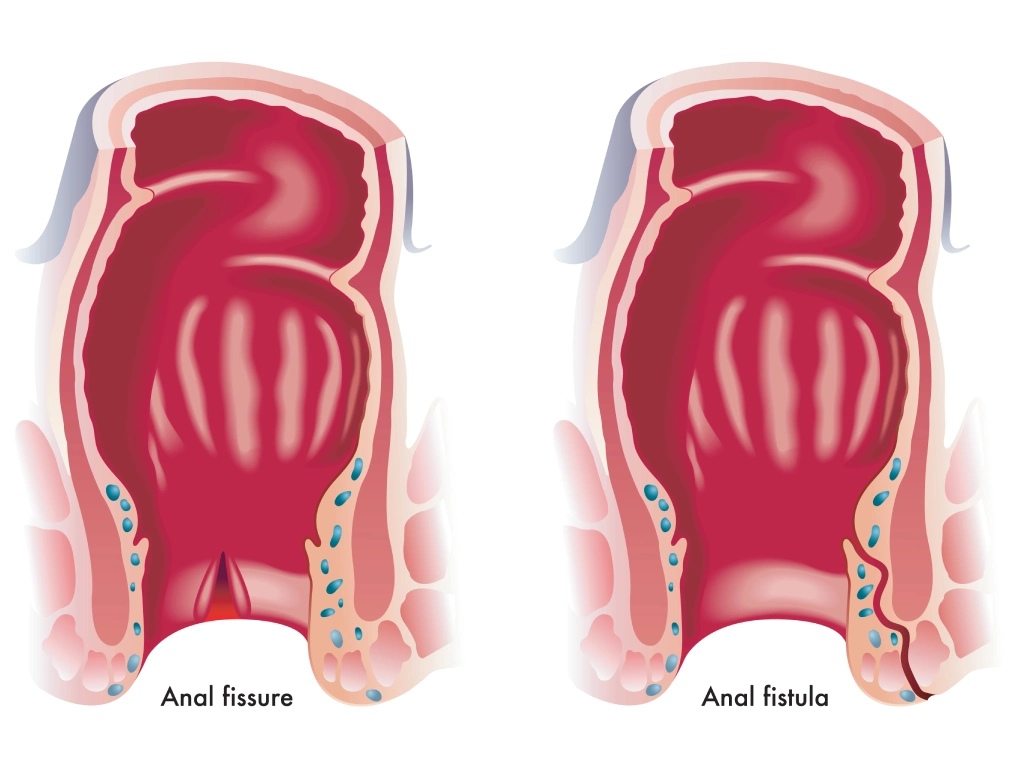
Could It Be an Anal Fissure or Anal Fistula?
Although anal fissures and anal fistulas can cause similar symptoms, they are different conditions that require different treatments.
Understanding the differences can help you know when it's time to seek medical advice.
| Anal Fissure | Anal Fistula |
|---|---|
| Small tear(s) in the lining of the anus, often caused by passing hard stools or persistent diarrhoea. | Tunnel formed after an anal infection or abscess. |
| Sharp pain during or after bowel movements | Persistent pain or swelling around the anus |
| Bright red bleeding | Pus or fluid discharge |
| Burning or itching | Fever may occur if infection is present |
| Often improves with medication | Usually requires surgery |
Although both conditions can cause pain around the anus, they are different conditions and require different treatments.
“In most cases, the underlying cause of rectal pain is not severe, but the pain felt can be sharp and throbbing as the nerve endings in the perianal region transmit pain signals to the brain.
Yet, it serves as a red flag. A signal your body sends to let you know something isn’t right.”
– Dr Ng Kheng Hong, Colorectal & General Surgeon
When Should I See a Doctor?
If your symptoms persist, keep coming back, or are accompanied by bleeding, swelling, discharge, or fever, it's important to seek medical attention.
Many people delay seeking treatment because they feel embarrassed discussing anal symptoms. However, these conditions are common, and early treatment often leads to faster relief and better outcomes.
How Are Anal Fissures and Anal Fistulas Treated?
Treatment depends on your diagnosis and the severity of your condition.
For anal fissures, treatment often begins with lifestyle changes, dietary advice, medications, or topical creams to help the tear heal.
For anal fistulas, surgery is usually required to remove the infected tract and reduce the risk of recurrent infection.
After assessing your condition, Dr. Ng Kheng Hong will recommend the treatment that is most appropriate for you
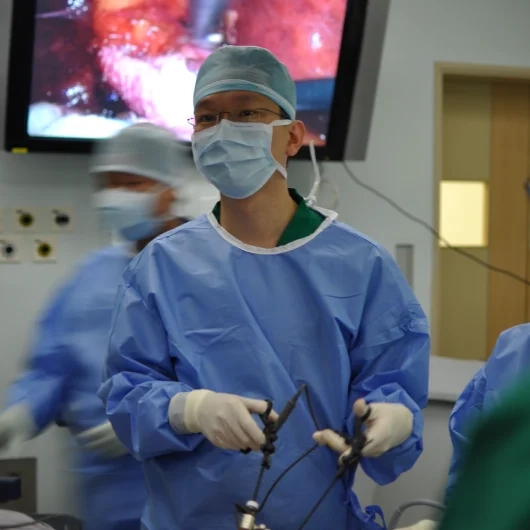
Dr Ng Kheng Kong
Dr Ng Kheng Kong is a Senior Consultant General & Colorectal Surgeon with extensive experience in diagnosing and treating anal fissures, anal fistulas, and other colorectal conditions.
- Over two decades of experience in the diagnosis and treatment of colorectal conditions
- UK-trained colorectal surgeon with extensive expertise in minimally invasive surgery
- Comprehensive care for both common and complex colorectal conditions
- Personalised treatment tailored to your condition
- Consultation at TEN Surgery Group, located in Gleneagles Medical Centre
Clinic Location

TEN Surgery Group (Gleneagles)
6 Napier Road
Suite #03-13
Gleneagles Medical Centre
Singapore 258499
Operating Hours
Mon – Fri: 08:30 – 12:00 | 14:00 – 17:00
Sat: 08:30 – 12:00
Sun & PH: Closed
Frequently Asked Questions
An anal fissure is a small tear in the lining of the anus, while an anal fistula is an abnormal tunnel that develops following an infection or abscess. Although both can cause anal pain, they require different treatments.
Pain during or after passing stool can have several causes. Common reasons include an anal fissure (a small tear in the lining of the anus), piles (haemorrhoids), or an anal fistula. Depending on the underlying cause, the pain may be sharp, burning, throbbing, or persistent. If the pain is severe, keeps coming back, or is accompanied by bleeding, swelling, or discharge, it's important to seek medical assessment to determine the cause and receive the appropriate treatment.
Many acute anal fissures improve with dietary changes, stool softeners, and medication. However, persistent or recurring fissures should be assessed by a colorectal specialist.
In most cases, yes. Unlike an anal fissure, an anal fistula usually does not heal on its own and often requires surgery to remove the fistula tract and prevent recurrent infections.
No. Anal pain can also be caused by piles, abscesses, infections, or other colorectal conditions. A proper assessment is the best way to identify the underlying cause.
Most anal fistulas are not life-threatening, but they usually do not heal on their own. Left untreated, they can lead to recurrent infections or abscesses. Early assessment allows appropriate treatment before complications develop.
Find Relief from Anal Pain
Living with persistent anal pain, bleeding, or discharge can affect your comfort and quality of life.
Whether your symptoms are caused by an anal fissure, anal fistula, or another colorectal condition, early diagnosis can help you receive the right treatment sooner.