

Do You Have Mastitis or a Breast Abscess?
Many women are unsure whether their symptoms are caused by a blocked milk duct, mastitis, an abscess or another breast condition.
You should arrange an assessment if you experience:
- Breast pain or tenderness
- Redness over part of the breast
- Swelling or firmness
- Warmth of the skin
- Fever or chills
- Pain and difficulty breastfeeding
- A painful breast lump
- Pus or unusual nipple discharge
Important: If your symptoms are not improving after 24 to 48 hours, it is important to seek medical attention promptly.
What Are Mastitis and Breast Abscesses?
Mastitis is an inflammation of breast tissue that is usually caused by a bacterial infection. It most commonly develops during breastfeeding when milk is trapped inside the breast, allowing bacteria to multiply.
If the infection is left untreated or does not respond to antibiotics, pus may collect inside the breast, forming a breast abscess.
Although mastitis and breast abscesses are frequently associated with breastfeeding, they can also affect women who have never breastfed or have stopped breastfeeding.
Mastitis vs Breast Abscess
| Mastitis | Breast Abscess |
|---|---|
| Inflammation or infection of breast tissue | Collection of pus within the breast |
| Usually treated with antibiotics | Usually requires drainage in addition to antibiotics |
| Breast may feel swollen, tender and warm | Painful lump that may feel soft or fluctuant |
| Fever may occur | Fever usually occurs and persists until the abscess is drained |
What Causes Mastitis and Breast Abscesses?
Several factors can increase the risk of developing mastitis and breast abscesses:
During Breastfeeding
- Blocked milk ducts
- Incomplete emptying of the breast
- Cracked nipples
- Poor breastfeeding latch
- Long intervals between feeds
Non-Breastfeeding Women
Although less common, breast infections can occur due to:
- Infected breast cysts
- Smoking
- Diabetes
- Weakened immune system
- Blocked ducts beneath the nipple
- Inflammatory breast conditions
How Are Mastitis and Breast Abscesses Diagnosed?

Clinical Assessment
A detailed examination helps determine the extent of infection and whether an abscess has formed.

Breast Ultrasound
Ultrasound helps detect fluid collections that require drainage while excluding other breast abnormalities.

Aspiration and Fluid Culture
If pus is present, a sample may be sent for laboratory testing to identify the bacteria responsible and guide antibiotic treatment.
Additional tests may be recommended if symptoms are not improving after antibiotics and drainage.
Treatment for Mastitis and Breast Abscess
Treatment depends on the severity of the infection and whether an abscess has developed.
Antibiotics
Most cases of mastitis improve with prescribed antibiotics.
Pain Relief
Anti-inflammatory medication and pain relievers can help improve comfort during recovery.
Continued Breastfeeding
For most women with lactational mastitis, continuing to breastfeed or express milk is encouraged unless advised otherwise by your doctor.
Ultrasound-Guided Needle Drainage
If an abscess has formed, the pus may be drained using a needle under ultrasound guidance. For suitable patients, ultrasound-guided needle drainage may help avoid the need for surgery.
Surgical Drainage
Larger or more complex abscesses may require a small surgical procedure to completely drain the infection.
Can Mastitis Be Prevented?
For breastfeeding mothers, the following measures may reduce the risk:
- Ensure proper breastfeeding technique
- Feed or express milk regularly
- Avoid prolonged breast engorgement
- Treat cracked nipples promptly
- Stay hydrated and get adequate rest
Women who experience recurrent infections may benefit from further evaluation to identify contributing factors.
When Should You See a Breast Specialist?
Arrange a consultation if you notice:
- A breast lump with redness and pain
- Breast swelling or redness with fever
- Symptoms that persist despite antibiotics
- Recurrent mastitis
- A breast abscess
- Infection that is not related to breastfeeding
- Persistent breast changes after the infection resolves
Prompt evaluation allows appropriate treatment while ensuring that more serious breast conditions are excluded.
Dr Tan Qing Ting
Senior Consultant Breast Surgeon
- Over 10 years of specialist experience
- Former Specialist Breast Surgeon at KK Women's & Children's Hospital (KKH), Singapore’s largest maternity hospital, with extensive experience managing conditions related to breastfeeding including mastitis and breast abscesses
- Ministry of Health HMDP recipient with advanced training in oncoplastic and reconstructive breast surgery
- Played a key role in introducing endoscopic mastectomy, advancing minimally invasive breast surgery at KKH
- Global Ambassador for Breast Cancer in Young Women Foundation
Qualifications
MBBS (Singapore) • MRCS (Edinburgh) • MMed (Surgery) • FRCS (Edinburgh)

Expert Care for Breast Infections
Breast infections are common and can usually be treated successfully with early medical care. In many cases, breastfeeding can continue and surgery can be avoided through ultrasound-guided needle drainage.
Whether you have your first episode of mastitis, a recurrent breast abscess or persistent breast pain, our goal is to help you recover while protecting your long-term breast health.
Clinic Location
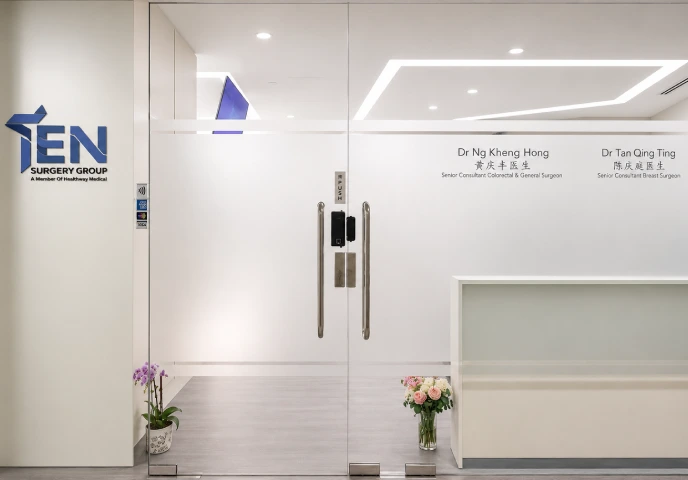
TEN Surgery Group (Gleneagles)
6 Napier Rd, Suite #03-13
Gleneagles Medical Centre,
Singapore 258499
Operating Hours
Mon - Fri: 08:30 – 12:00 | 14:00 – 17:00
Sat: 08:30 – 12:00
Sunday & PH: Closed
Insurance panels:
Alliance, Fullerton, IHP, iXchange (Cigna, Parkway, Shenton), MHC, Prudential, Singlife, Great Eastern, Income
Frequently Asked Questions (FAQ)
Some mild cases caused by milk stasis may improve with effective breast emptying but bacterial mastitis usually requires antibiotics. Medical assessment is recommended if symptoms persist or worsen.
Yes. In most cases, continuing to breastfeed or express milk is safe and can help clear blocked ducts. Your doctor will advise you if there are any exceptions.
Not necessarily. Many breast abscesses can be treated successfully with ultrasound-guided needle drainage combined with antibiotics. Surgery is generally reserved for larger, recurrent or complex abscesses.
Yes. Although less common, non-lactational mastitis can occur due to infection of breast cysts, blocked ducts, smoking, diabetes, or other inflammatory breast conditions.
Mastitis does not cause breast cancer. However, if symptoms do not improve as expected or keep recurring, further assessment is important to rule out other underlying breast diseases, including inflammatory breast cancer.
No. You can make an appointment directly with Dr Tan Qing Ting without a referral.