



Dr Natascha Putri
TEN Surgery Group, Mount Elizabeth & Gleneagles, Singapore
MBBS (Singapore), MMed (Surgery), MRCS (Edinburgh), FRCS (Edinburgh)
Dr Natascha Putri is a General Surgeon with subspecialty expertise in Head and Neck Surgery. She has clinical expertise in the management of thyroid conditions, salivary gland diseases, skin tumours as well as head and neck cancers.
Book an Appointment with Dr Natascha PutriWhen Should You See a Doctor for Changes in Your Mouth?
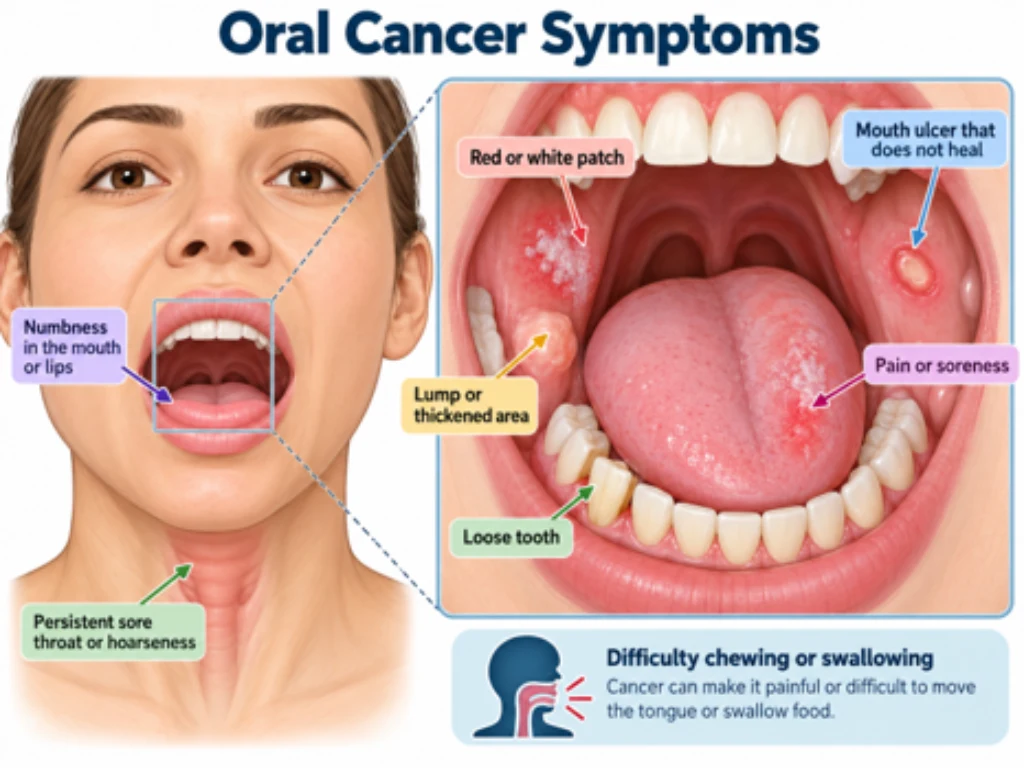
Consider seeing a doctor or dentist if you have:
- A mouth ulcer that does not heal after 2 to 3 weeks
- A lump or thickened area in the mouth
- A persistent red or white patch
- Unexplained bleeding in the mouth
- Persistent pain or numbness
- Difficulty chewing or swallowing
- Difficulty moving the tongue or jaw
- An unexplained loose tooth
- A persistent lump in the neck
These symptoms do not necessarily mean cancer, but persistent changes should be checked.
What Is Oral Cancer?
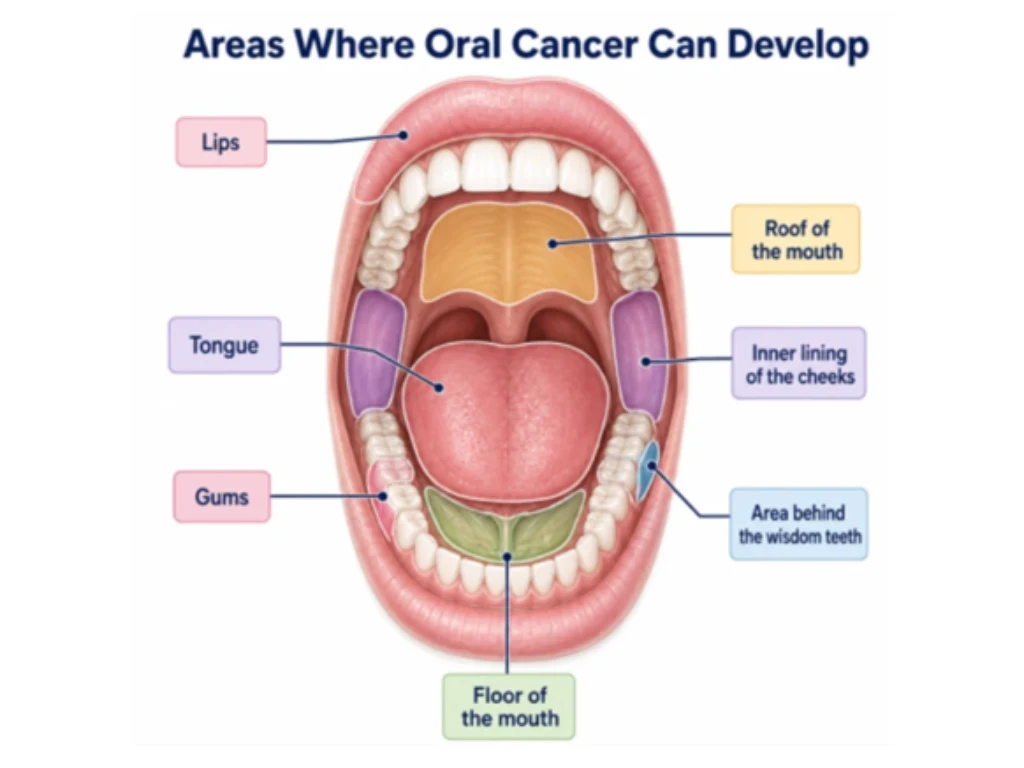
Oral cancer occurs when abnormal cells in the tissues of the mouth grow uncontrollably.
It may develop in areas such as the:
- Tongue
- Gums
- Inner cheeks
- Floor of the mouth
- Roof of the mouth
- Lips
The most common type of oral cancer is squamous cell carcinoma.
Oral cancer may appear as a persistent ulcer, lump, thickened area, or red or white patch. Some cancers may cause little or no pain in the early stages of the disease.
How Can I Check if I Have Oral Cancer?
Your assessment usually begins with a review of your symptoms and an examination of the mouth and neck. In some cases, the examination may extend to the neck and may involve additional procedures, such as nasoendoscopy or a bedside ultrasound of the neck to assess the lymph nodes.
Further tests may include:
Biopsy
A small tissue sample may be taken to check for cancer cells.
Imaging
CT scans, MRI scans, or PET scans may be recommended to assess the affected area and nearby structures.
Further Assessment
If cancer is confirmed, additional tests may be recommended to:
- Determine the extent of the cancer (staging) and whether nearby lymph nodes or other parts of the body are involved. Fine needle aspiration cytology (FNAC) may be used to assess a suspicious lymph node or lump for cancer cells.
- Identify the exact tumour type and characteristics. Where appropriate, further tumour testing may help determine whether certain treatments, such as chemotherapy, immunotherapy or targeted therapy, may be suitable.
Not every mouth lesion requires a biopsy or scan. Dr Natascha will advise what is appropriate based on the examination.
How Is Oral Cancer Treated?
Treatment depends on the location and stage of the cancer, as well as your overall health.
For many oral cancers, surgery is an important part of treatment.
Depending on the condition, treatment may involve:
- Removal of the tumour in the mouth
- Neck dissection to remove affected lymph nodes
- Reconstruction where required
- Radiotherapy
- Chemotherapy and other systemic treatments
Oral and head and neck cancers are a diverse group of diseases, and their treatment can be complex.
For some patients, treatment may involve consultations with different specialists, including medical oncologists for chemotherapy, immunotherapy or targeted therapy, and radiation oncologists for radiotherapy or proton therapy. Allied healthcare professionals, such as speech and swallowing therapists, may also be involved in rehabilitation after treatment.
When surgery is required, treatment planning also considers important functions such as speech, eating, swallowing, and appearance, with the aim of achieving cancer control while preserving quality of life where possible.
Consult With Dr Natascha Putri
Dr Natascha Putri is a General Surgeon with subspecialty expertise in Head and Neck Surgery.
Her clinical interests include:
- Oral cancer
- Head and neck cancers
- Thyroid conditions and cancers
- Salivary gland conditions
- Neck lumps
- Skin tumours of the head and neck
She completed advanced fellowship training at Memorial Sloan Kettering Cancer Center in New York and is involved in ongoing medical education and head and neck oncology research.
Her approach focuses on clear communication, individualised treatment plans, preserving functions, and quality of life.
Clinic Location
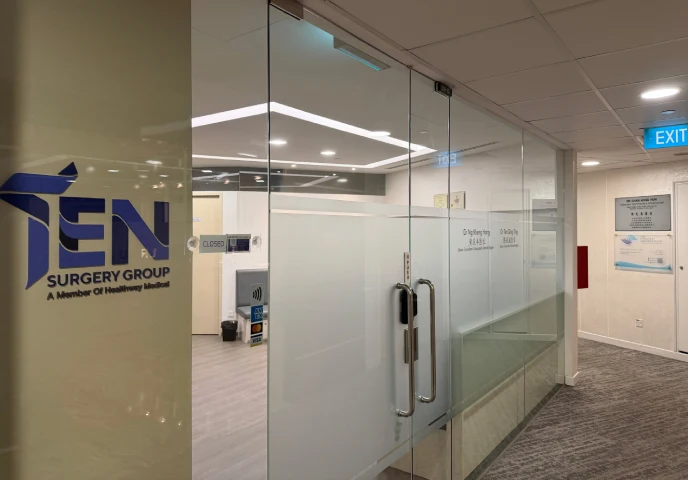
TEN Surgery Group
(Gleneagles Hospital)
6A Napier Road, Suite #03-13
Gleneagles Medical Centre, Singapore 258499
Operating Hours
Monday – Friday: 08:30 – 12:00 | 14:00 – 17:00
Saturday: 08:30 – 12:00
Sunday & Public Holiday: Closed

TEN Surgery Group
(Mount Elizabeth Medical Centre)
3 Mount Elizabeth, Suite #04-03
Medical Centre, Singapore 228510
Operating Hours
Monday – Friday: 08:30 – 12:00 | 14:00 – 17:00
Saturday: 08:30 – 12:00
Sunday & Public Holiday: Closed
Frequently Asked Questions (FAQ)
Many mouth ulcers heal within one to two weeks. If an ulcer persists beyond two to three weeks, continues to grow, bleeds or changes, consider having it assessed.
Yes. Smoking is an important risk factor, but oral cancer can also occur in people who have never smoked.
A persistent ulcer should be assessed even if it does not hurt, as some abnormal oral lesions may cause little discomfort early on.
A biopsy is usually required to confirm whether cancer cells are present.
Patients with suspected or confirmed oral cancer may be assessed by a doctor experienced in head and neck conditions. As part of her surgical practice, Dr Natascha Putri manages cancers of the mouth and its organs, head and neck, as well as other medical conditions occuring in the head and neck.