


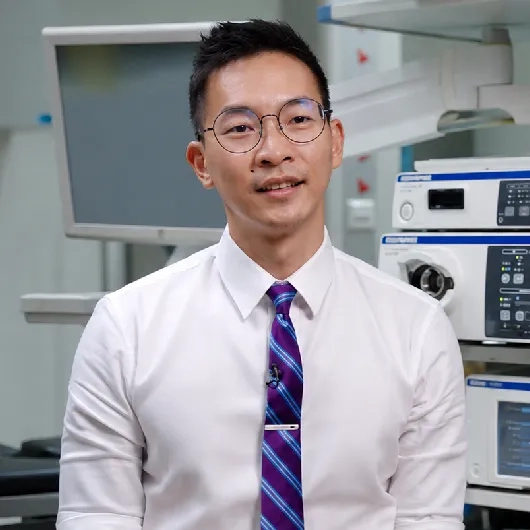
Dr Eugene Yeo
Senior Consultant Colorectal & General Surgeon
MBBS (Singapore), MMed (Surgery), FRCS (Ed), FAMS (Singapore)
With more than 20 years of clinical experience, Dr Yeo manages a full range of colorectal and general surgical conditions, including:
- Colorectal cancer
- Complex colorectal diseases
- Minimally invasive surgery cases
- Endoscopic and laparoscopic procedures
He completed his medical training in Singapore and previously served as Consultant Surgeon at Singapore General Hospital (SGH), Department of Colorectal Surgery.
He further advanced his expertise through a fellowship at Yonsei Severance Hospital, Seoul, which has extensive experience in robotic surgery.
He is also listed on the Da Vinci® Robotic Surgery Surgeon Locator, highlighting his expertise in robotic colorectal procedures.
Insurance Panels:
Adept, Alliance, Bupa, Fullerton, Geoblue, GE Shield, HSBC Life, IHP, Income Shield, iXchange, MHC, PruShield, Singlife Shield
About Colon Health

The colon (large intestine) is responsible for absorbing water and forming stool. When affected by disease or structural changes, symptoms may develop gradually or sometimes without obvious warning signs.
A colon specialist in Singapore, Dr Eugene Yeo is trained to diagnose and manage colon conditions using clinical evaluation, imaging, and procedures such as colonoscopy.
Common Colon Conditions

Colon Cancer
Colon cancer develops in the large intestine and may progress silently in early stages. Screening and early detection play an important role in management.

Colonic Polyps
Polyps are growths in the colon that may be benign but can sometimes develop into cancer over time. Removal may be recommended depending on size and type.

Diverticular Disease
Small pouches form in the colon wall and may become inflamed or infected in some cases.

Inflammatory Bowel Disease (IBD)
Includes Crohn’s disease and ulcerative colitis, which cause chronic inflammation of the digestive tract.

Change in Bowel Habits
Persistent constipation, diarrhoea, or alternating bowel patterns should be evaluated.
Diagnostic & Treatment Services
Colonoscopy Screening
Examination of the colon to detect polyps, inflammation, or signs of cancer.
Diagnostic Evaluation
Clinical assessment with imaging and laboratory tests when required.
Polyp Removal
Endoscopic removal of colon polyps when clinically indicated.
Colon Cancer Management
Treatment planning may include surgery and minimally invasive approaches depending on diagnosis.
Minimally Invasive Surgery
Laparoscopic or robotic-assisted surgery may be considered in selected cases.
Experiencing these Symptoms?
You should consult a colon specialist in Singapore if you experience:
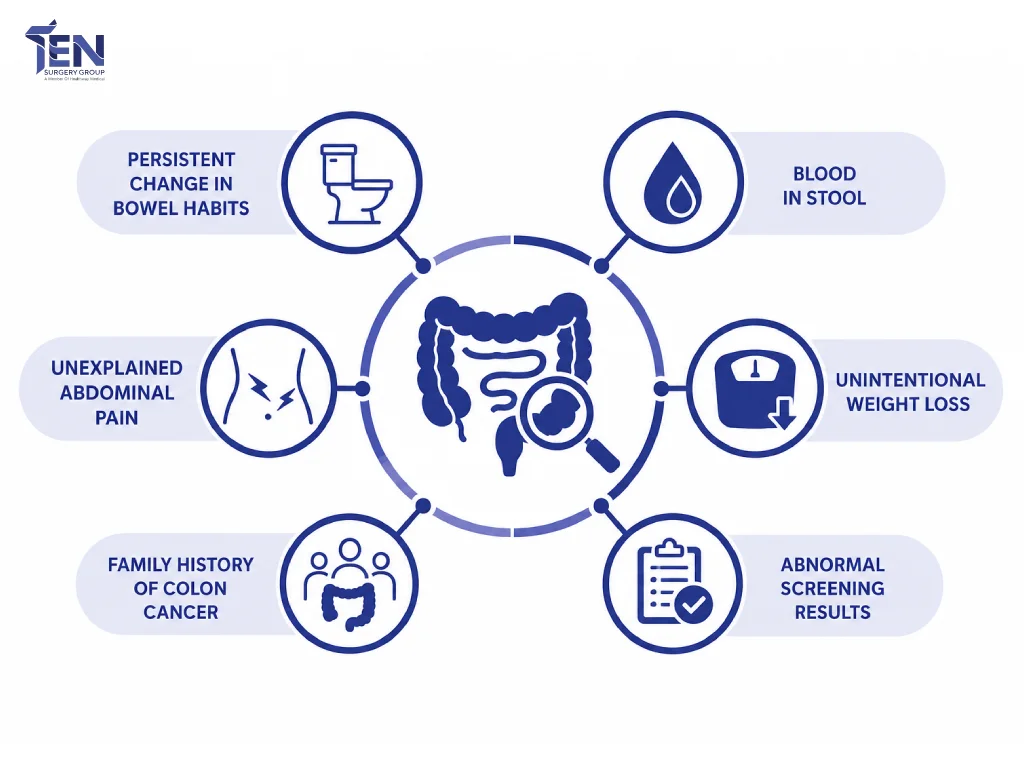
- Persistent change in bowel habits
- Blood in stool
- Unexplained abdominal pain
- Unintentional weight loss
- Family history of colon cancer
- Abnormal screening results
Early evaluation may help identify conditions at an earlier and more manageable stage.
Clinic Practice Place
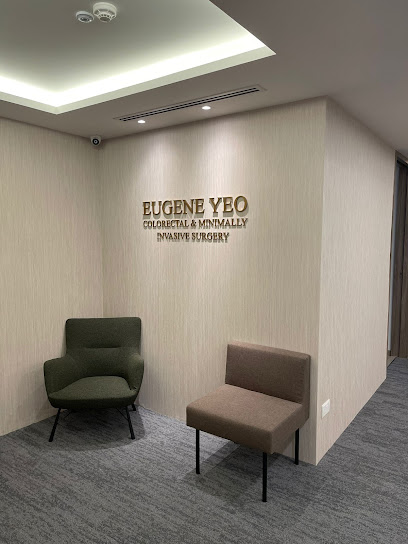
Eugene Yeo Colorectal & Minimally Invasive Surgery
(TEN Surgery Group)
3 Mount Elizabeth,
Suite #04-03 Medical Centre
Singapore 228510
Operating Hours
Mon – Fri: 08:30 – 12:00 | 14:00 – 17:00
Sat: 08:30 – 12:00
Sun & PH: Closed
Frequently Asked Questions
You should see a colon specialist in Singapore if you have blood in stool, persistent bowel changes, or abdominal discomfort. Dr. Eugene Yeo sees patients with these conditions at Mount Elizabeth Medical Centre.
Not all colorectal conditions require surgery. Treatment depends on the diagnosis and severity of the condition. Some cases may be managed with medication, lifestyle changes, or endoscopic procedures, while others may require surgical intervention.
Early signs may include persistent changes in bowel habits, rectal bleeding, abdominal discomfort, unexplained weight changes, or a feeling of incomplete bowel movement. These symptoms should be assessed by a specialist if they persist.
Yes. Colorectal cancer can often be detected early through screening methods such as colonoscopy. Early detection allows for timely treatment and may improve outcomes.
Colonoscopy is usually performed under sedation, so most patients do not feel pain during the procedure. Some mild bloating may occur afterwards.
Robotic colorectal surgery is a minimally invasive technique that uses robotic assistance to enhance precision during surgery. It may be considered for selected patients requiring complex colorectal procedures.
Screening is generally recommended for individuals with risk factors such as age, family history of colorectal cancer, or persistent bowel symptoms. A colorectal specialist in Singapore can advise on appropriate timing based on individual risk.