



About Colon Health
The colon (large intestine) is responsible for absorbing water and forming stool. When affected by disease or structural changes, symptoms may develop gradually or sometimes without obvious warning signs.
A colorectal surgeon can assess your medical history, symptoms and examination findings to determine whether further investigations or treatment are needed.
Common Colon Conditions

Colon Cancer
Colon cancer develops in the large intestine and may progress silently in early stages. Screening and early detection play an important role in management.

Colonic Polyps
Polyps are growths in the colon that may be benign but can sometimes develop into cancer over time. Removal may be recommended depending on size and type.

Diverticular Disease
Small pouches form in the colon wall and may become inflamed or infected in some cases.

Inflammatory Bowel Disease (IBD)
Includes Crohn’s disease and ulcerative colitis, which cause chronic inflammation of the digestive tract.

Haemorrhoids
Haemorrhoids are swollen blood vessels in or around the anus and lower rectum. They may cause bright red bleeding during bowel movements, itching, discomfort or a lump near the anus.
Treatment depends on the severity of symptoms and may include dietary and lifestyle changes, medication or a procedure when indicated.

Anal Fissures
An anal fissure is a tear in the skin lining the anal canal. It can cause sharp pain during bowel movements and small amounts of bright red bleeding.
Treatment may include measures to keep stools soft, topical medication and, when necessary, a procedure for persistent fissures.

Change in Bowel Habits
Persistent constipation, diarrhoea, or alternating bowel patterns should be evaluated.
Symptoms That May Require a Colorectal Assessment
You should consult a colon specialist in Singapore if you experience:
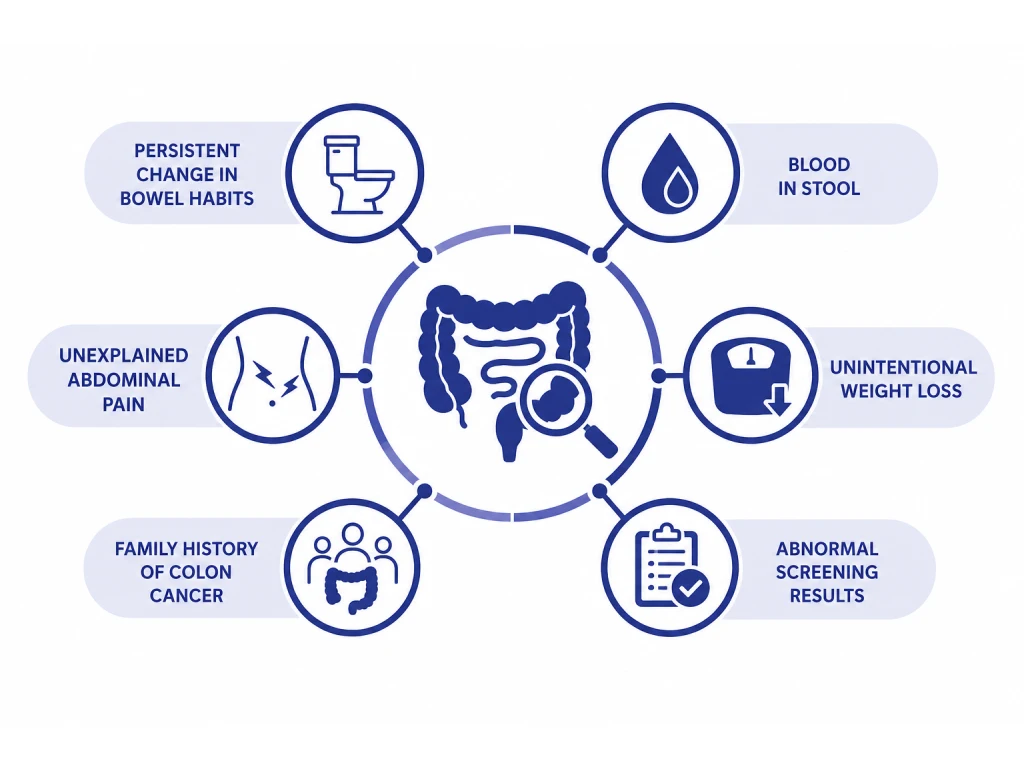
- Persistent change in bowel habits
- Blood in stool
- Unexplained abdominal pain
- Unintentional weight loss
- Family history of colon cancer
- Abnormal screening results
These symptoms do not necessarily indicate cancer, but identifying the cause can help guide appropriate treatment.
Seek urgent medical attention if you have substantial or ongoing bleeding, severe abdominal pain, or abdominal pain accompanied by vomiting and an inability to pass stool or gas.
Diagnostic & Treatment Services

Colonoscopy Screening
Examination of the colon to detect polyps, inflammation, or signs of cancer.

Diagnostic Evaluation
Clinical assessment with imaging and laboratory tests when required.

Polyp Removal
Endoscopic removal of colon polyps when clinically indicated.

Colon Cancer Management
Treatment planning may include surgery and minimally invasive approaches depending on diagnosis.

Minimally Invasive Surgery
Laparoscopic or robotic-assisted surgery may be considered in selected cases.
What Should You Expect During a Colonoscopy?
Understanding the procedure beforehand can help you feel more prepared for your appointment.
01
Before the Procedure
Your clinic will provide instructions on bowel preparation, including dietary guidance and medication to clear the colon. You should disclose your current medications, allergies and relevant medical conditions so that your care team can advise you on any necessary adjustments.
If sedation is planned, you will receive instructions about fasting, transport and post-procedure restrictions.
02
During the Procedure
A colonoscope, which is a flexible tube with a light and camera, is gently inserted through the anus to examine the rectum and colon. Sedation is commonly offered, depending on the clinical setting and patient's needs.
The doctor examines the bowel lining for abnormalities. If appropriate, small polyps may be removed or tissue samples collected for further examination.
03
After the Procedure
You may experience temporary bloating or mild abdominal discomfort. If sedation has been administered, you will need to follow the clinic's recovery and transport instructions.
Your doctor will explain the initial findings and whether further treatment or follow-up is required. Biopsy results, where applicable, may be available later.
The procedure, its preparation and recovery arrangements should be discussed with your treating team before your appointment.